2 Digit Subtraction: Step-by-Step With Regrouping
2 digit subtraction is easiest when you keep track of tens and ones. Write the numbers in columns so each place value lines up, then subtract the ones first and the tens next. If the top ones digit is smaller, you regroup from the tens. A quick check at the end helps you know the answer is right.
Start with place value
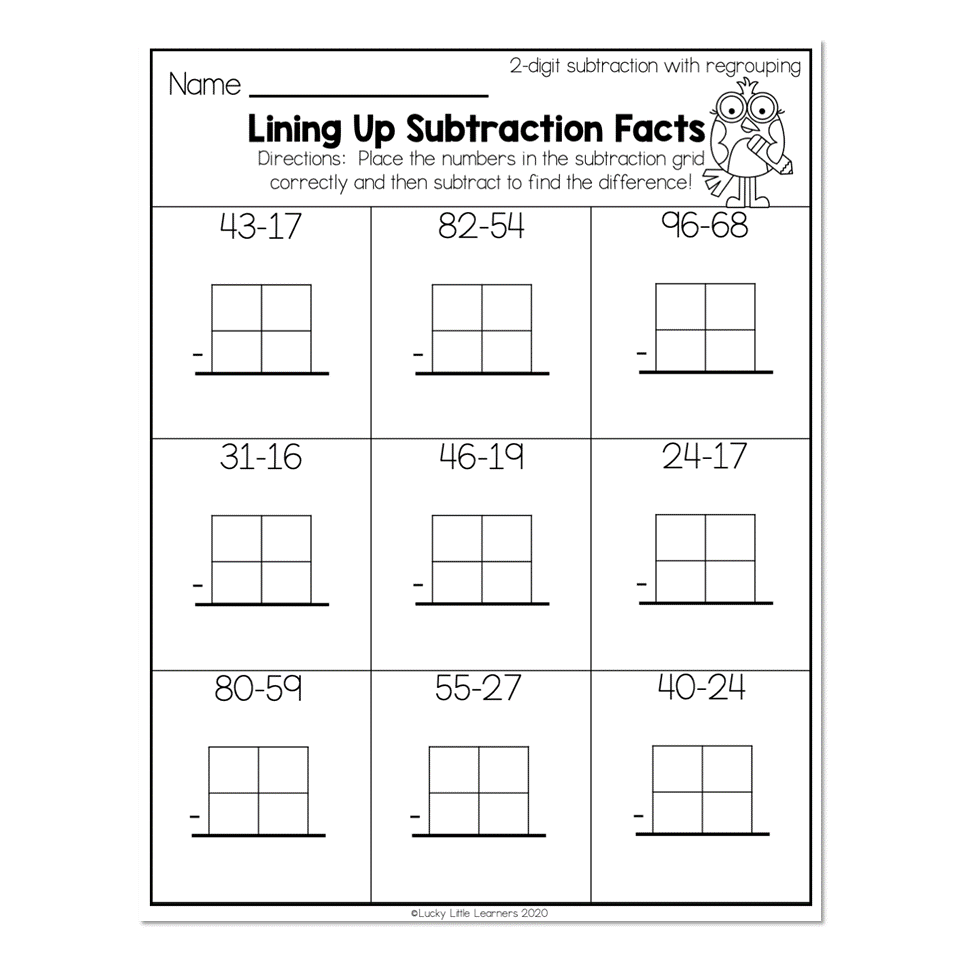
source: shop.luckylittlelearners.com
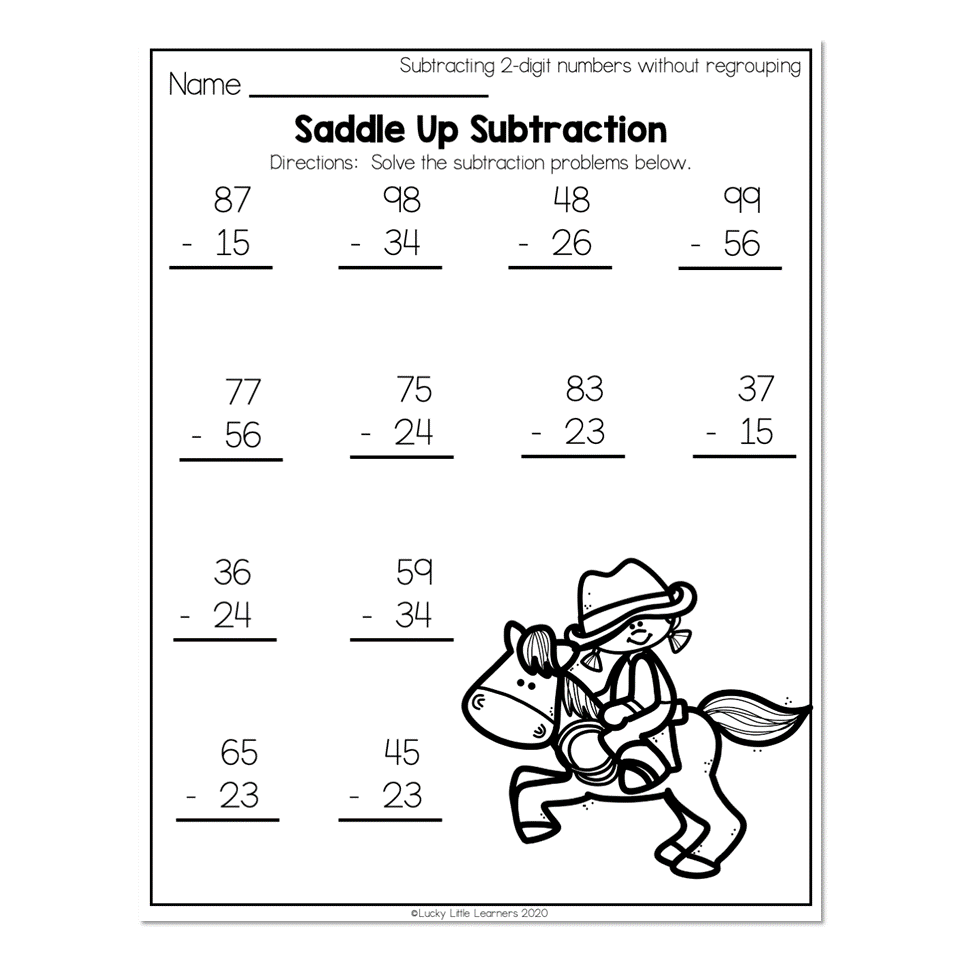
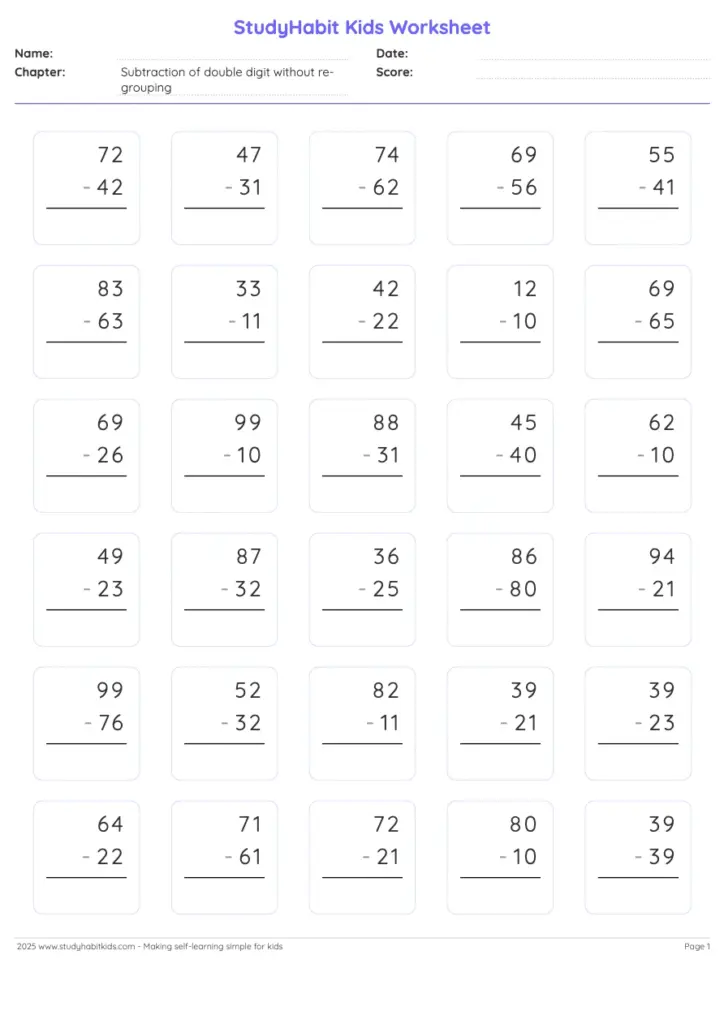
In standard column subtraction, the right-hand digit is the ones place and the left-hand digit is the tens place. Line up both numbers so ones sit under ones and tens sit under tens. Then subtract the ones column first, followed by the tens column. For example, in 54 − 21, subtract 4 − 1 to get 3, then 5 − 2 to get 3, so the answer is 33. Keeping the columns neat prevents mistakes.
When regrouping is needed
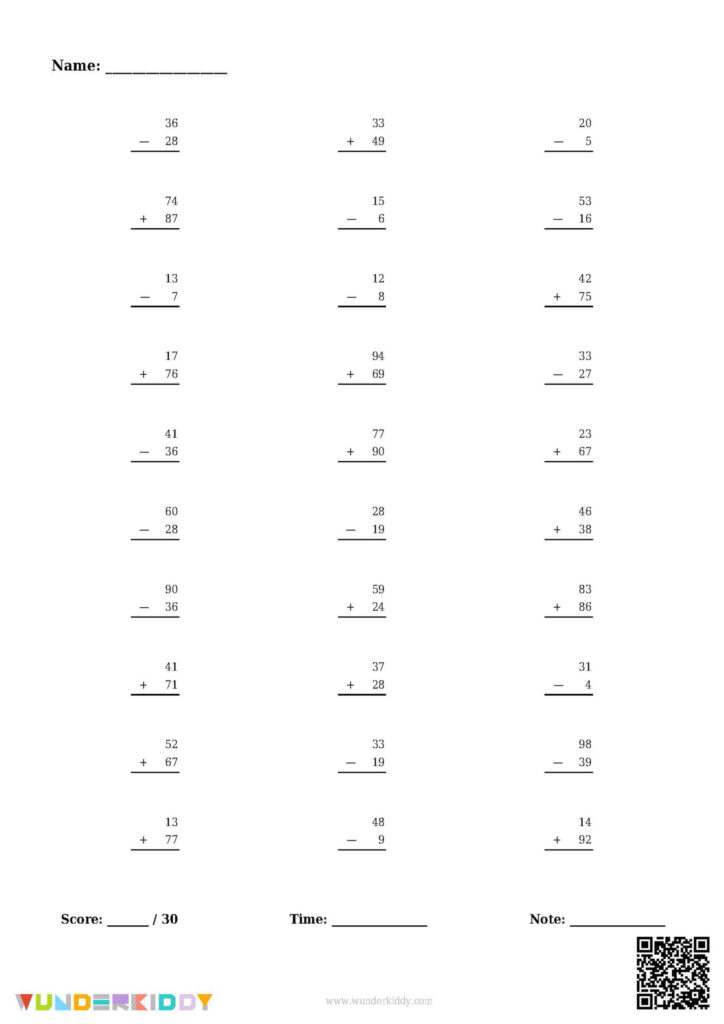
source: wunderkiddy.com
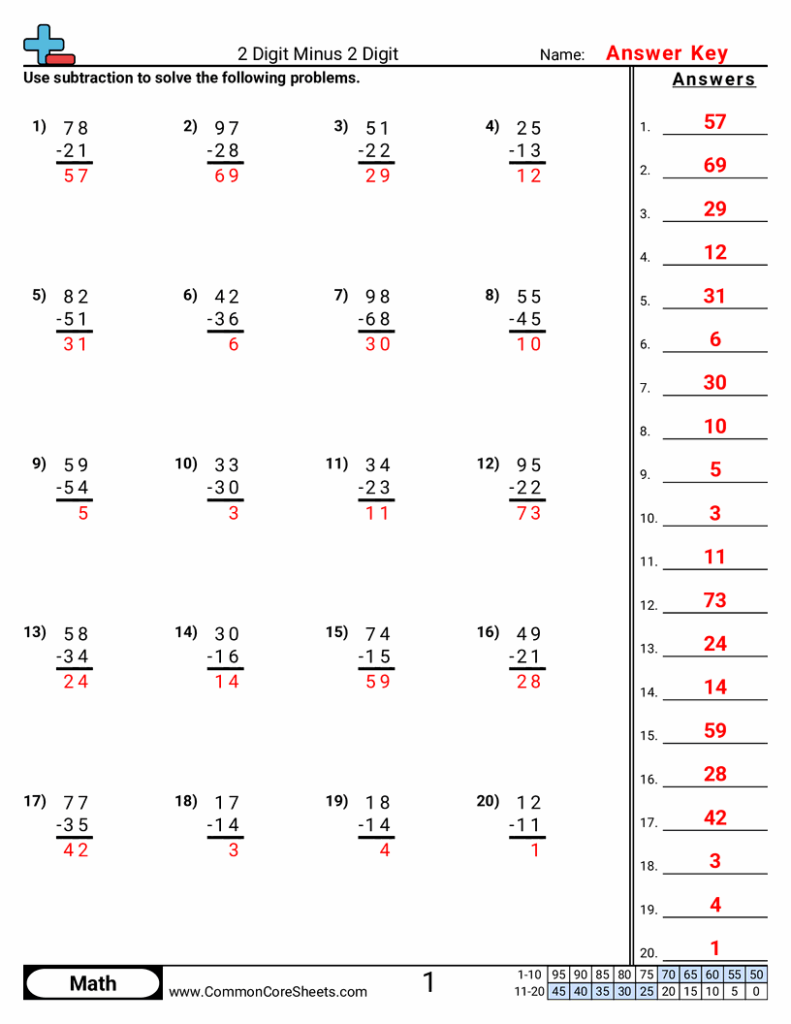
source: www.commoncoresheets.com
Sometimes the top ones digit is smaller than the bottom ones digit, so you cannot subtract in the ones place right away. In 52 − 28, 2 is smaller than 8. Regroup one ten from the 5 tens, leaving 4 tens, and turn that ten into 10 ones. Now the ones become 12 − 8 = 4, and the tens become 4 − 2 = 2. The answer is 24. Regrouping lets you keep the subtraction accurate.
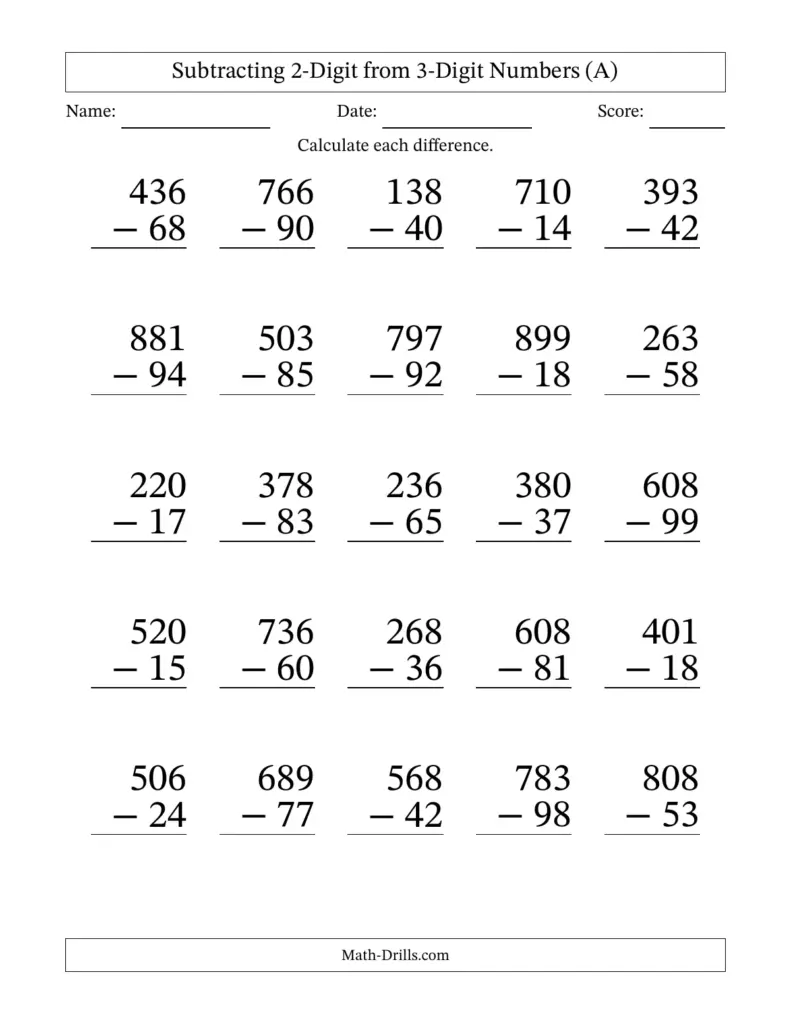
source: math-drills.com
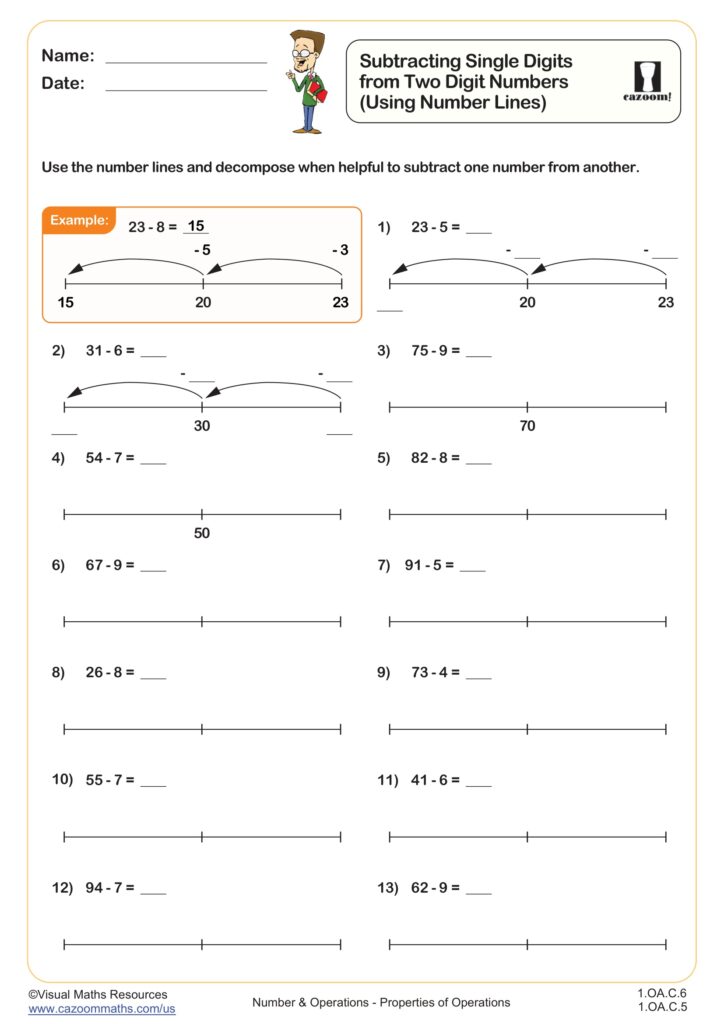
source: www.cazoommaths.com
source: shop.luckylittlelearners.com
A quick way to check 2 digit subtraction is to add the difference back to the number you subtracted. If 52 − 28 = 24, then 24 + 28 should equal 52. If it does, your subtraction is correct. This check works for problems with and without regrouping. When you practice, focus on lining up the digits, subtracting the ones first, and regrouping only when needed. That simple routine makes two-digit subtraction much easier to trust.
source: www.studyhabitkids.com