2nd Grade Word Problems: What To Look For
Second grade word problems should feel just challenging enough to build confidence without overwhelming a child. The best resources focus on the skills most often taught in class, especially addition and subtraction within 100, basic place value, and simple measurement or time situations. When a parent or teacher knows what to look for, it is much easier to choose practice that matches a child’s current level.
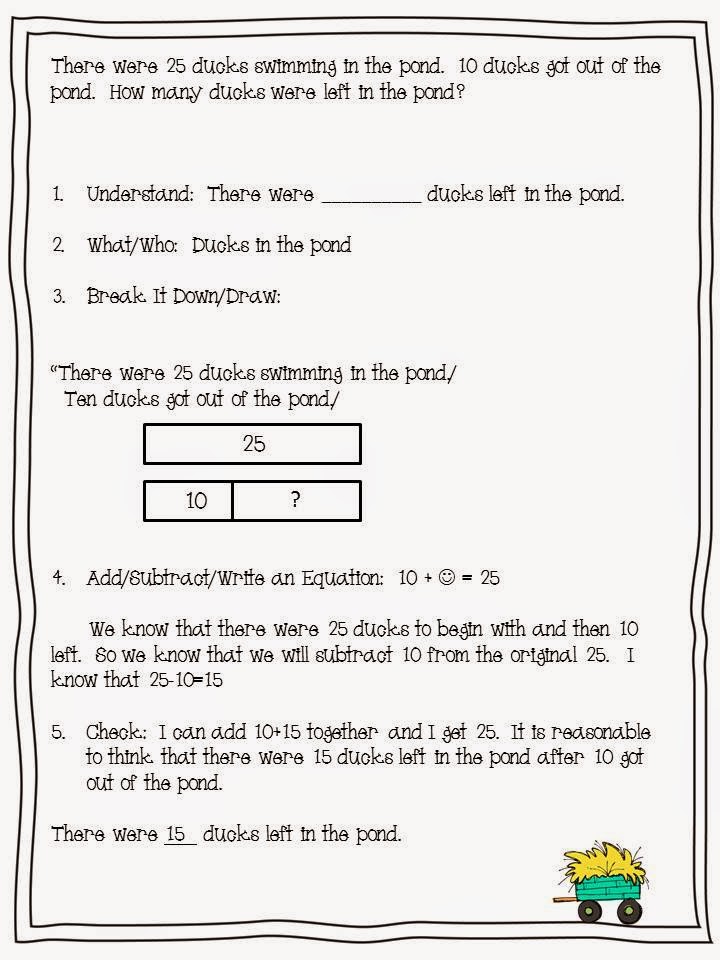
source: Super Second Grade Smarties
Core Skills to Practice
A strong set of 2nd grade word problems usually centers on a few familiar skills. Look for adding and subtracting within 100, including problems that may require regrouping in a simple form. Many second graders also work with place value, such as thinking about tens and ones, or comparing numbers. Good practice may include short measurement questions, telling time to the nearest five minutes, or simple money situations.
These topics should appear in everyday contexts, like sharing crayons, counting books, or measuring a pencil. The goal is to connect math to a situation a child can picture and solve with basic reasoning.
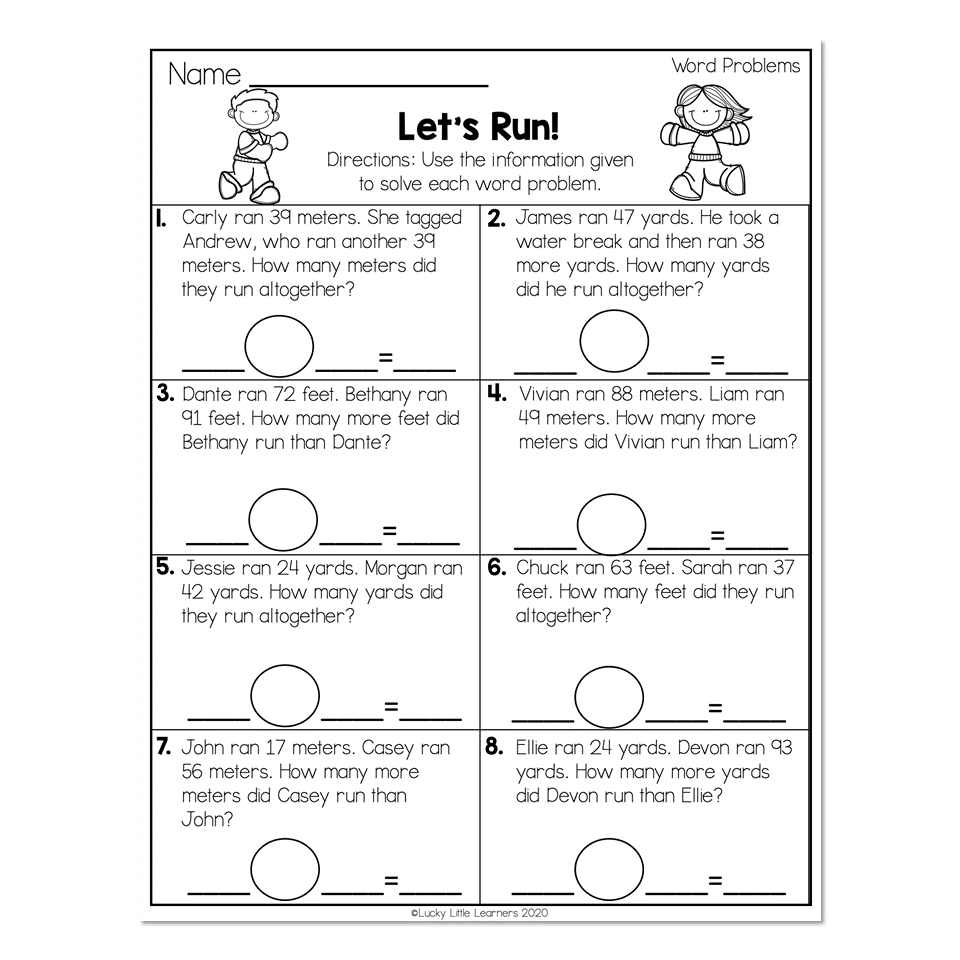
source: Shop – Lucky Little Learners
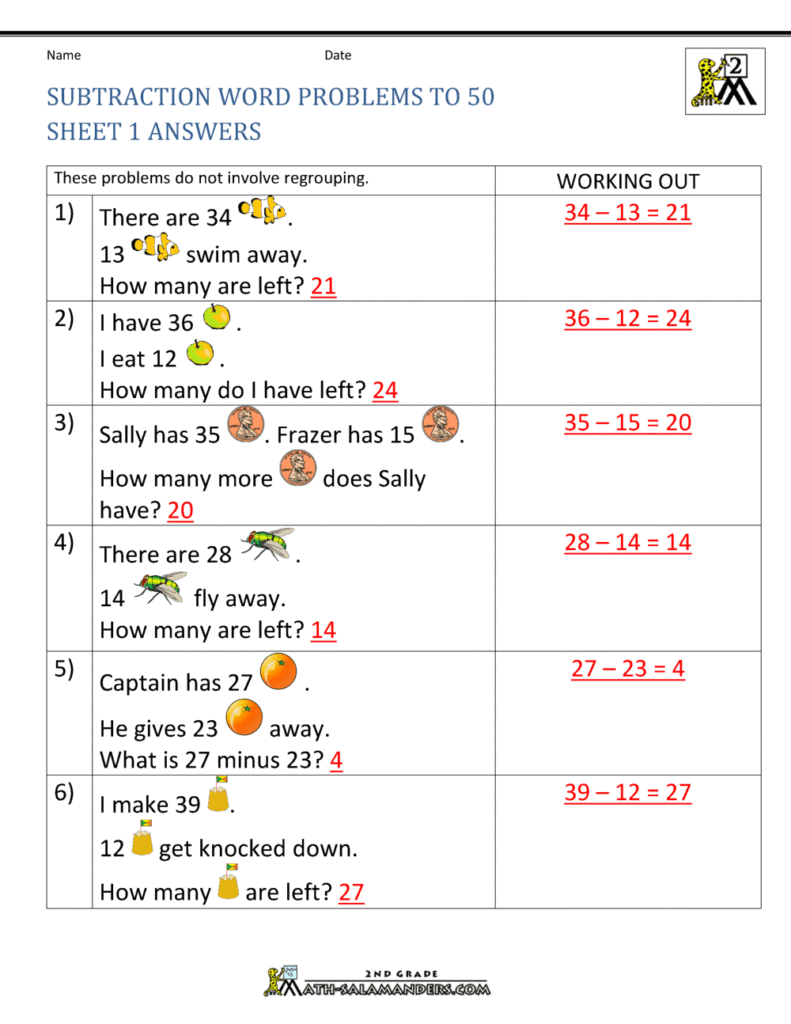
source: 2nd Grade Math Salamanders 2nd Grade Math Worksheets
For second graders, the writing should be clear and manageable. Short sentences help reduce reading barriers, and the numbers should be easy to find. The best problems usually ask for one step, or at most a simple two-step process that still feels logical. A good resource avoids tricky wording, extra details, or hidden information. For example, a problem might ask how many stickers are left after some are given away, or how many more apples one child has than another.
If a child can explain the situation aloud before solving it, the problem is probably age-appropriate. The format should support confidence, not test reading endurance.
Best Practice Formats
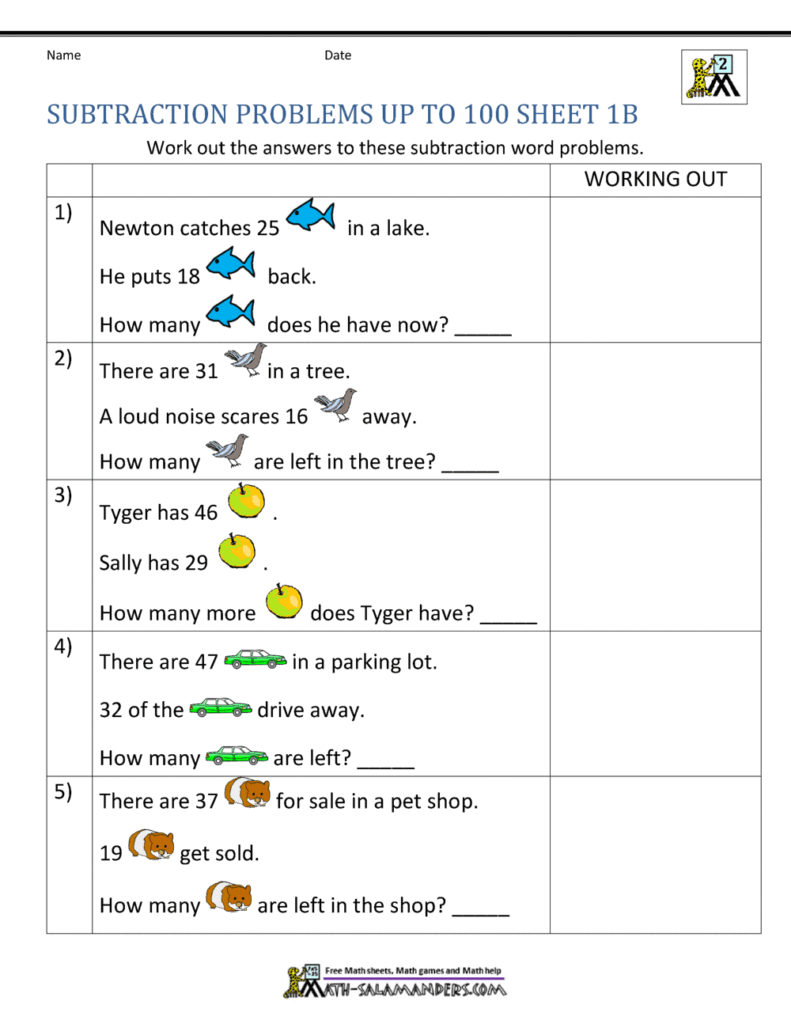
source: Math Salamanders
When choosing 2nd grade word problems, look for formats that make practice easy to use at home or in class. Printable worksheets are helpful for quick review, while mixed problem sets give children practice with more than one skill in a single page. Some resources are better for homework because they are short and focused; others work well as classroom warm-ups, partner practice, or check-in work.
It also helps to match the problems to the child’s current standard or lesson. If a student is still working on basic addition, stay there before moving into more complex subtraction or mixed skills. The best resource is the one that fits the child’s level and keeps the math manageable.