December is easy to recognize because it closes out the year, but it is also a month with a surprising amount of history and seasonal meaning. From its Latin name to its place in different hemispheres, December stands out as more than just the final box on the calendar. A few well-known observances also make it one of the most distinctive months of the year.
Calendar Position and Name
December is the 12th and final month of the Gregorian calendar, so it marks the end of the annual cycle in most modern calendars. Its name comes from the Latin word decem, meaning “ten.” That may seem odd at first, but it reflects the older Roman calendar, when December was originally the tenth month before January and February were added. The name has stayed even though its position changed.
source: mamateaches.com

source: www.thelittlepicturecompany.co.uk

source: www.icontainers.com
December’s seasonal meaning depends on where you live. In the Northern Hemisphere, it falls during early winter, with shorter days, colder weather, and the winter solstice usually occurring around December 21 or 22. In the Southern Hemisphere, the same month brings summer, longer daylight hours, and warmer conditions. That contrast makes December a useful reminder that calendars are shared globally, but seasons are not.
Observances That Stand Out

source: www.the-star.co.ke
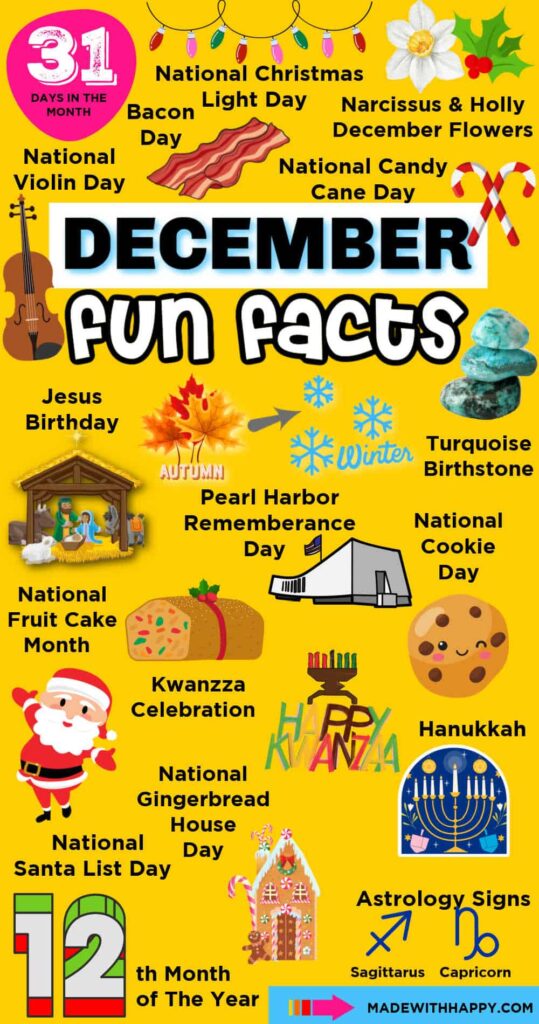
Several widely recognized observances help make December distinctive. Christmas on December 25 is one of the most celebrated holidays in the world, both religiously and culturally. Hanukkah often falls in December as well, though its dates vary each year because it follows the Hebrew calendar. December 31 is New Year’s Eve, which closes the month with celebrations, countdowns, and preparations for the year ahead. These events give December a strong sense of transition.
source: www.madewithhappy.com

source: www.ef.edu
A good takeaway is that December combines calendar history, seasonal contrast, and major observances in one month. It is the end of the Gregorian year, yet its name preserves an older Roman system. Whether it feels like winter or summer depends on the hemisphere, and the month is marked by traditions that make it especially familiar around the world. That mix is what makes December so notable.
source: loriloveshomes.com