5 Senses Coloring Pages For Early Learners
5 senses coloring pages give children a simple way to explore sight, hearing, smell, taste, and touch through pictures they can color. The theme is easy to understand: each page usually shows one sense in a kid-friendly scene, such as an eye, ear, nose, tongue, or hand. These pages work well for quick, low-prep activities that are both calm and familiar.
source: The Hollydog Blog
What These Pages Usually Show
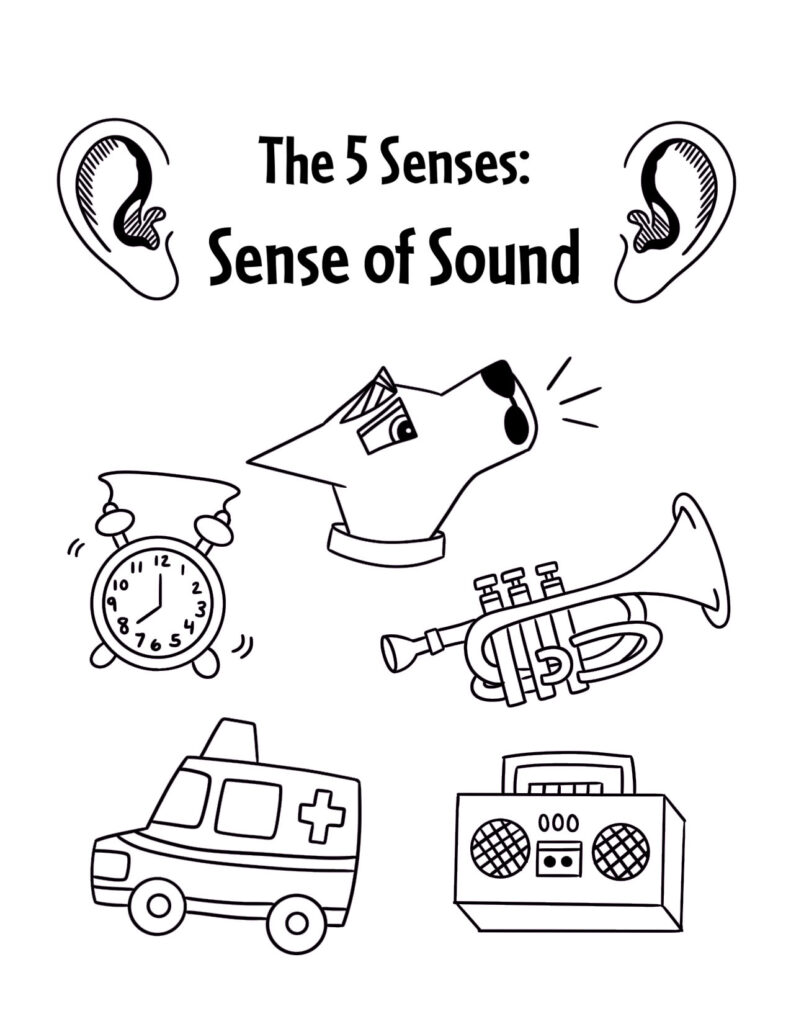
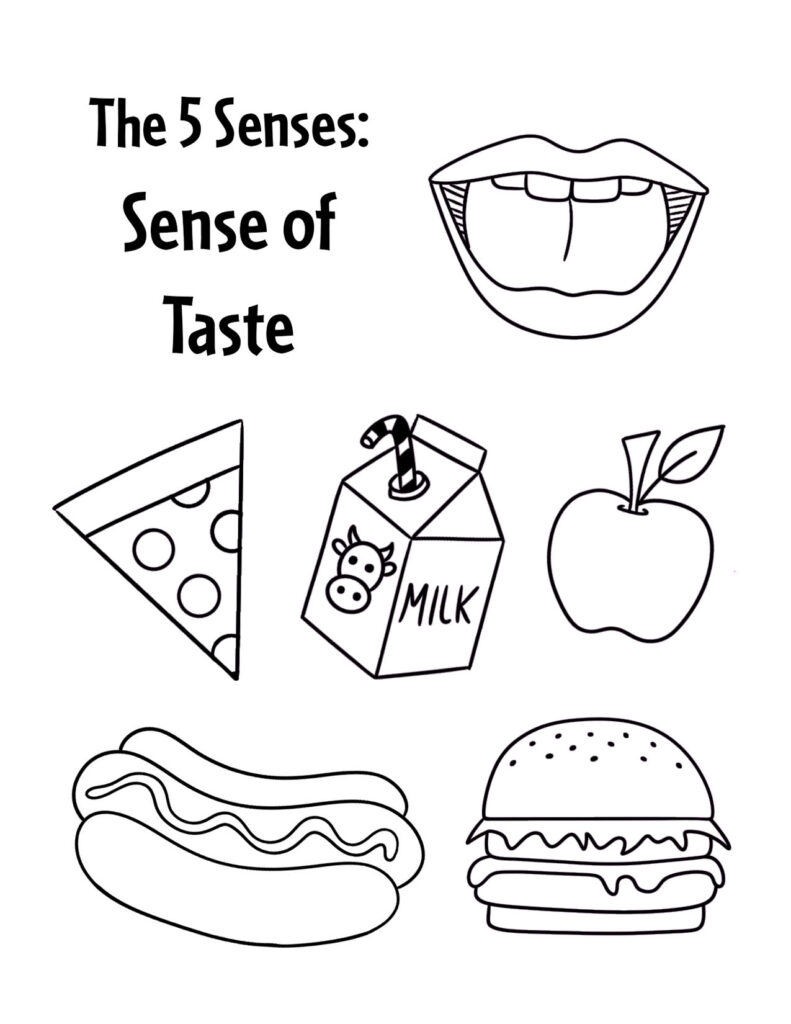
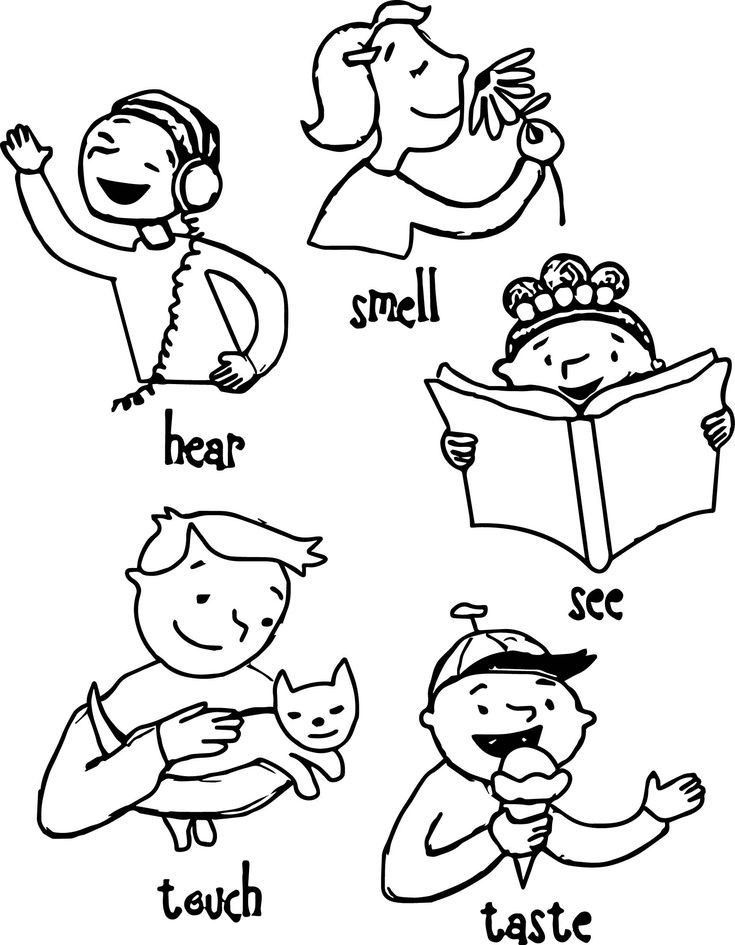
A useful set of 5 senses coloring pages often includes five separate pages, one for each sense. Each page may feature a large simple illustration, a clear label, and small details children can color without much frustration. For example, sight might show eyes and something to look at, hearing might show an ear or musical notes, and touch might use a hand or textured object.
Smell and taste are often pictured with flowers, food, or other everyday items. This makes the pages easy to recognize and helps children connect each sense to something concrete. The best sets keep the lines bold and uncluttered so young learners can finish the page independently.
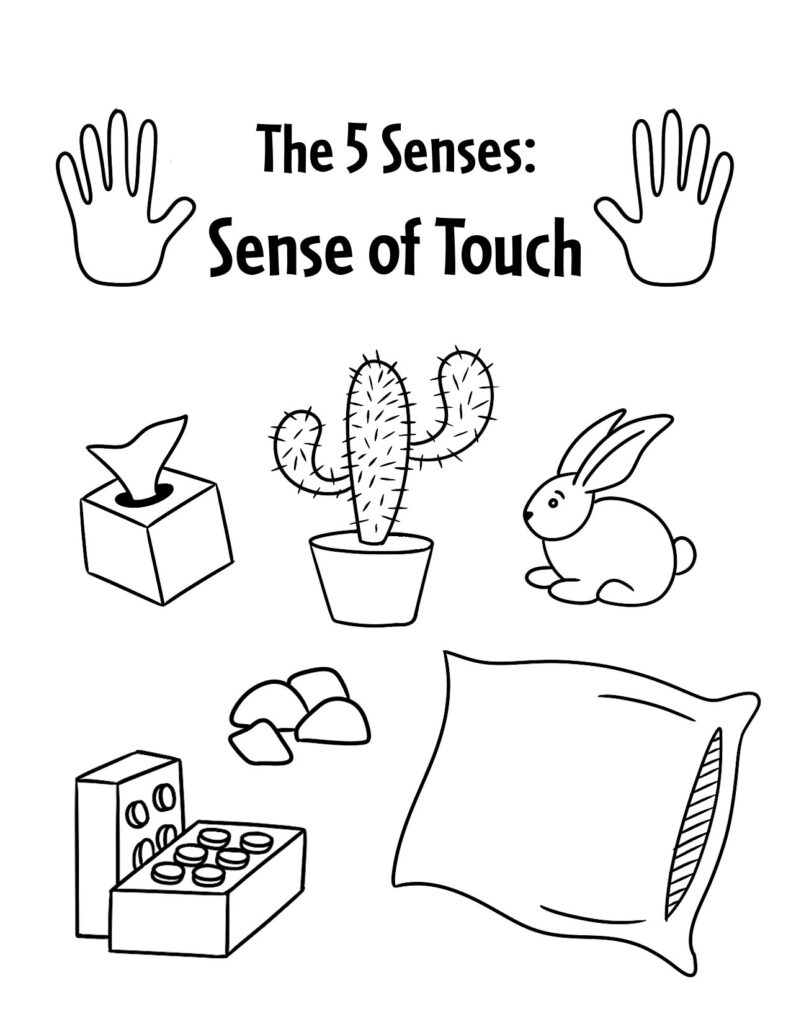
source: The Hollydog Blog
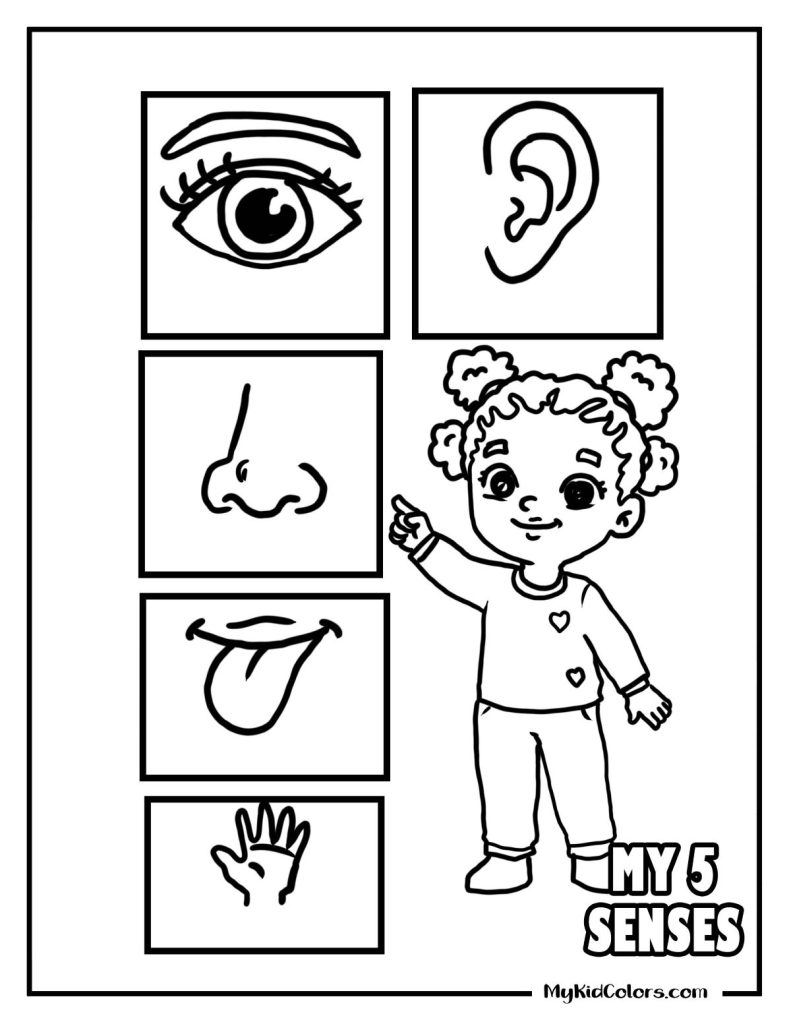
source: My Kid Colors
These coloring pages are commonly used in classroom centers, homeschool routines, early learning lessons, or quiet-time activities. Teachers may place them in a sensory-themed center, while parents can use them as a simple sit-down activity that still feels purposeful. Because the pages are visual and low-pressure, they can also help children who need a calm task between other activities. A child might color the hearing page with bright headphones or the touch page with a soft blanket, adding personal choices without changing the theme.
That flexibility is part of what makes the format so practical for preschool and early elementary ages.
Age Fit and Easy Use
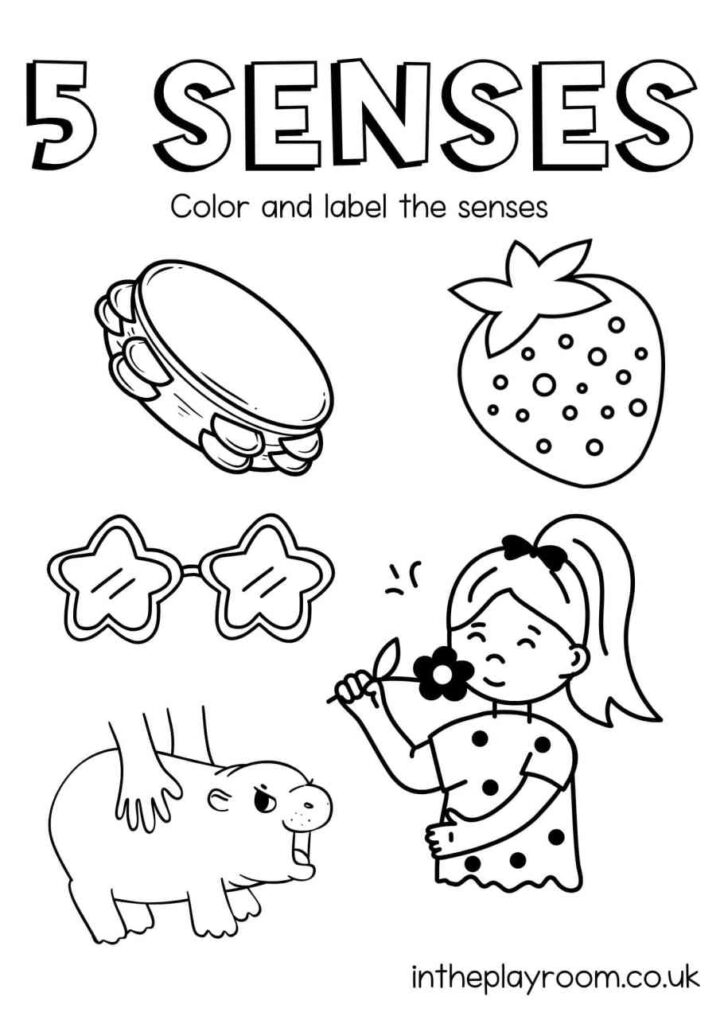
source: In The Playroom
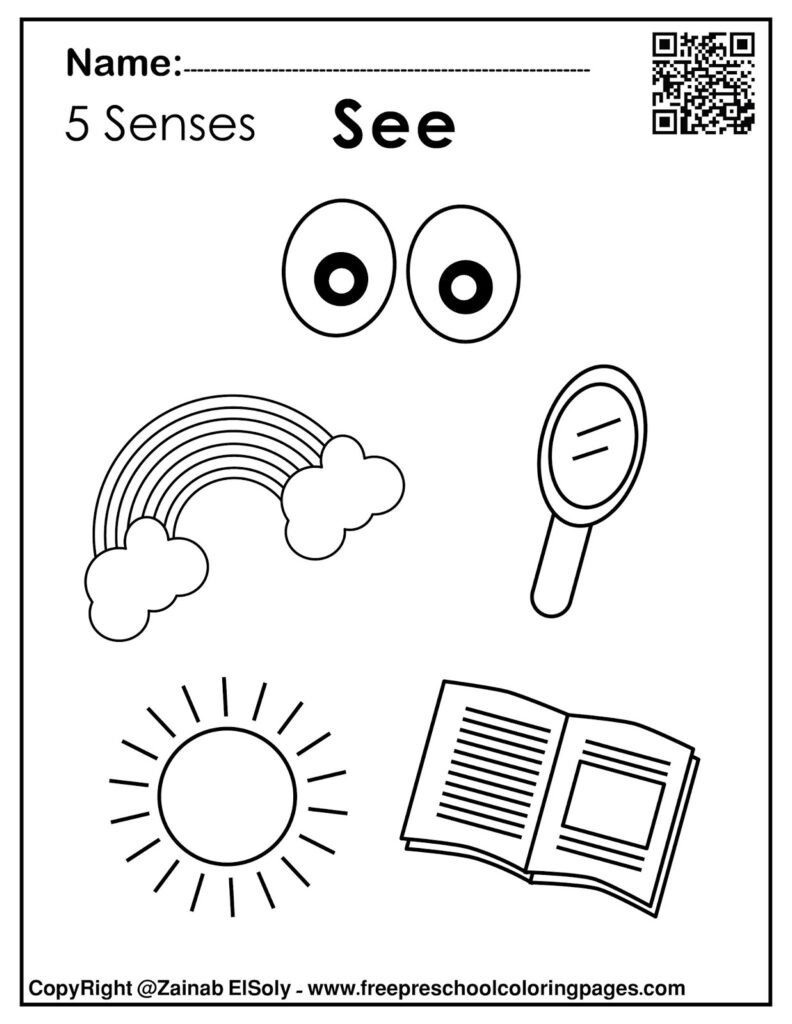
source: Busy Shark
source: The Hollydog Blog
When choosing 5 senses coloring pages, age appropriateness matters. Younger children usually do best with large shapes, thick outlines, and very few small details, while older children may enjoy a little more space for coloring patterns or adding labels. Simple pages are easier for crayons, colored pencils, or markers, and they reduce the chance of frustration. It also helps when the images are instantly recognizable, so children can focus on the sense itself instead of trying to decode a complicated drawing.
For a smooth experience, look for pages that are clear, easy to print, and simple enough to use right away. A good set should feel inviting, not overwhelming.
source: Pinterest