12th Grade Vocabulary Words For Senior-Year Study
12th grade vocabulary words should stretch students beyond everyday language and prepare them for college reading, essays, and discussions. A strong senior-level list usually includes words that appear in literature, history, science, and standardized tests. The goal is not memorizing rare terms, but learning words with enough meaning, nuance, and usage support to recognize them in context and use them accurately in speaking and writing.
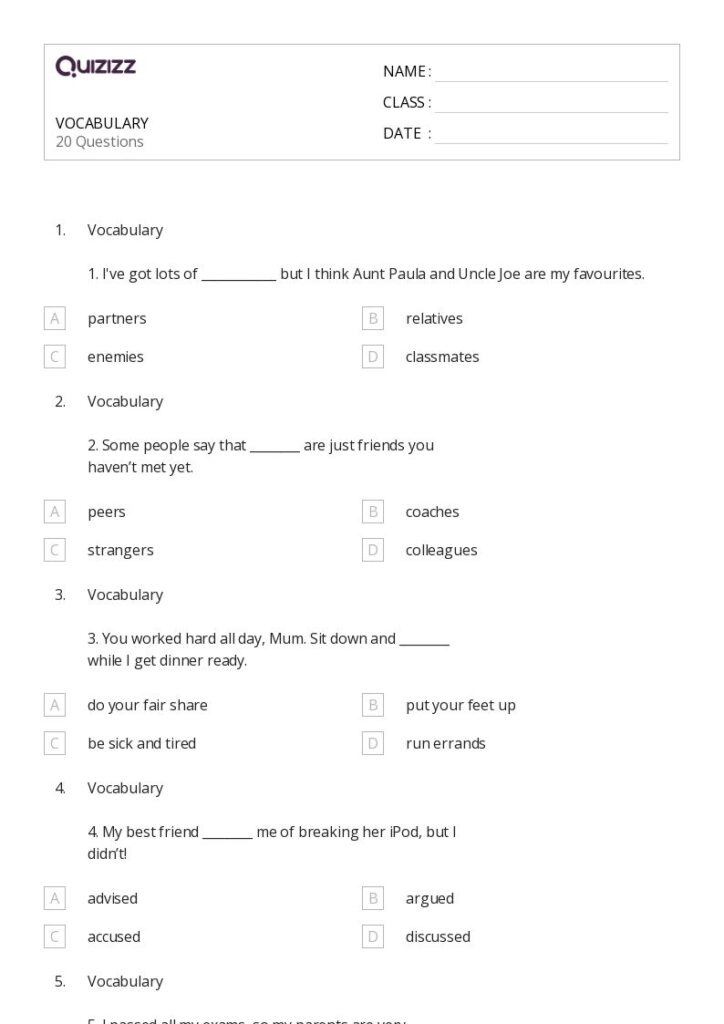
source: Free Educational Worksheets for All Ages
College-Prep Word List
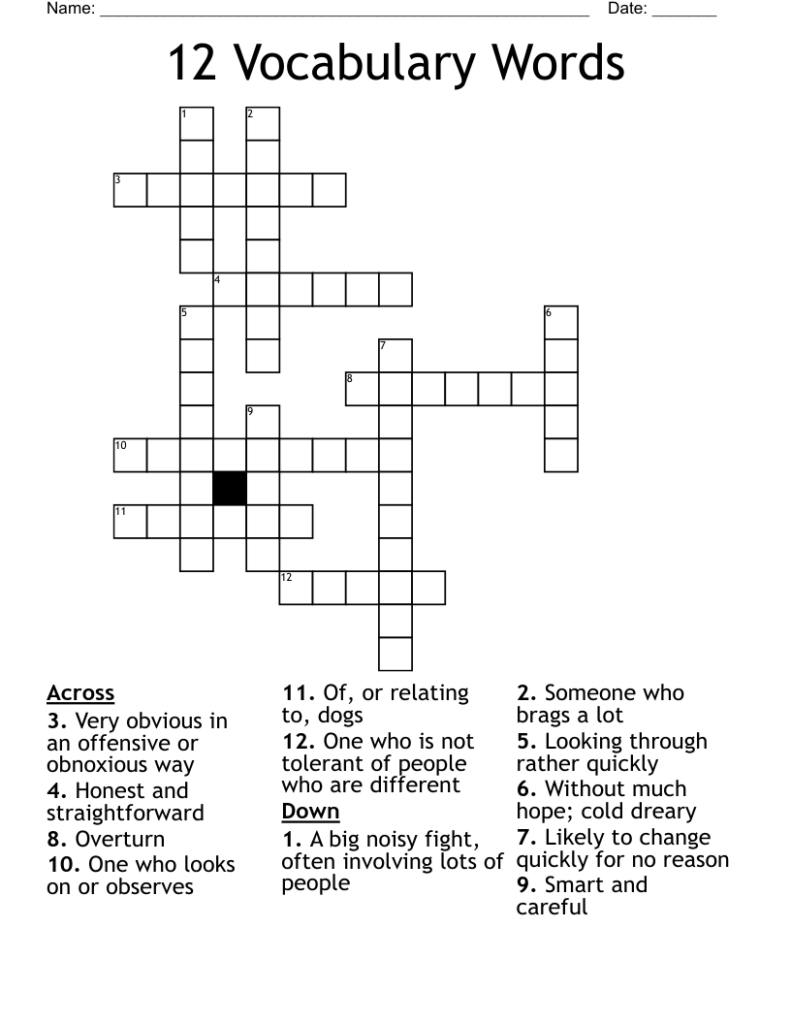
source: WordMint
Here is a focused set of senior-level vocabulary words with plain-English meanings and quick context help: aberration—something unusual or different from the norm; “His missed deadline was an aberration.” Alleviate—make less severe; “The medicine helped alleviate the pain.” Ambiguous—unclear or open to more than one meaning; “The ending was ambiguous.” Concur—agree; “I concur with your opinion.” Pragmatic—practical and realistic; “She took a pragmatic approach to the project.”
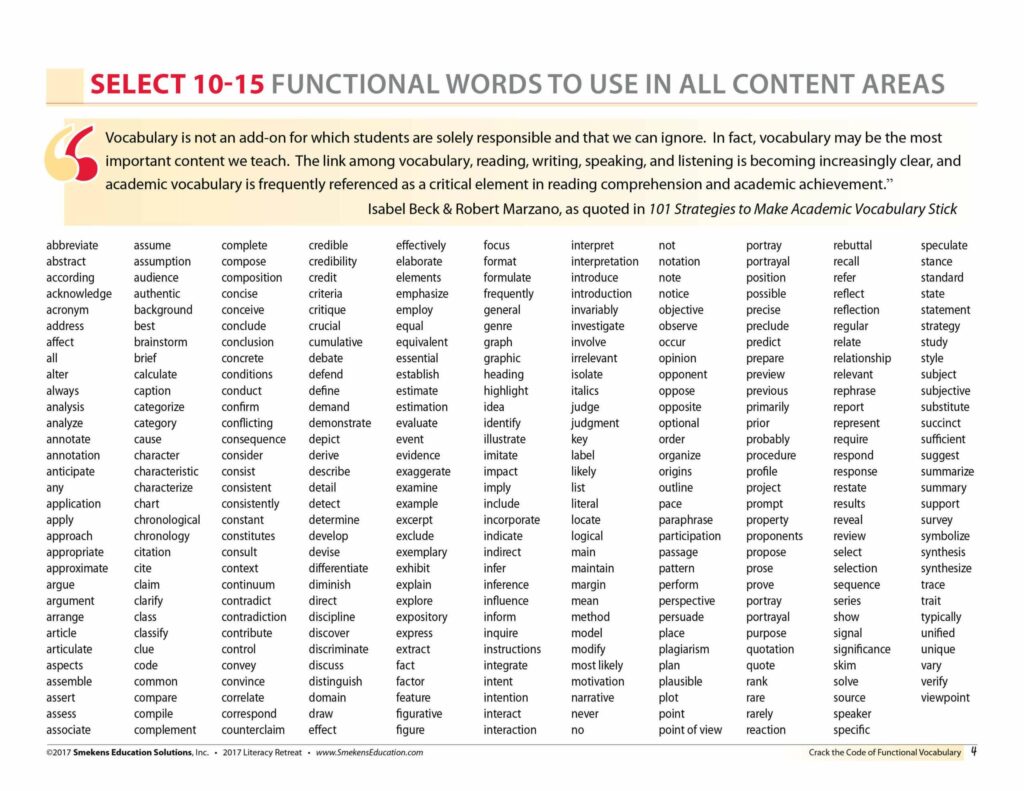
source: Smekens Education
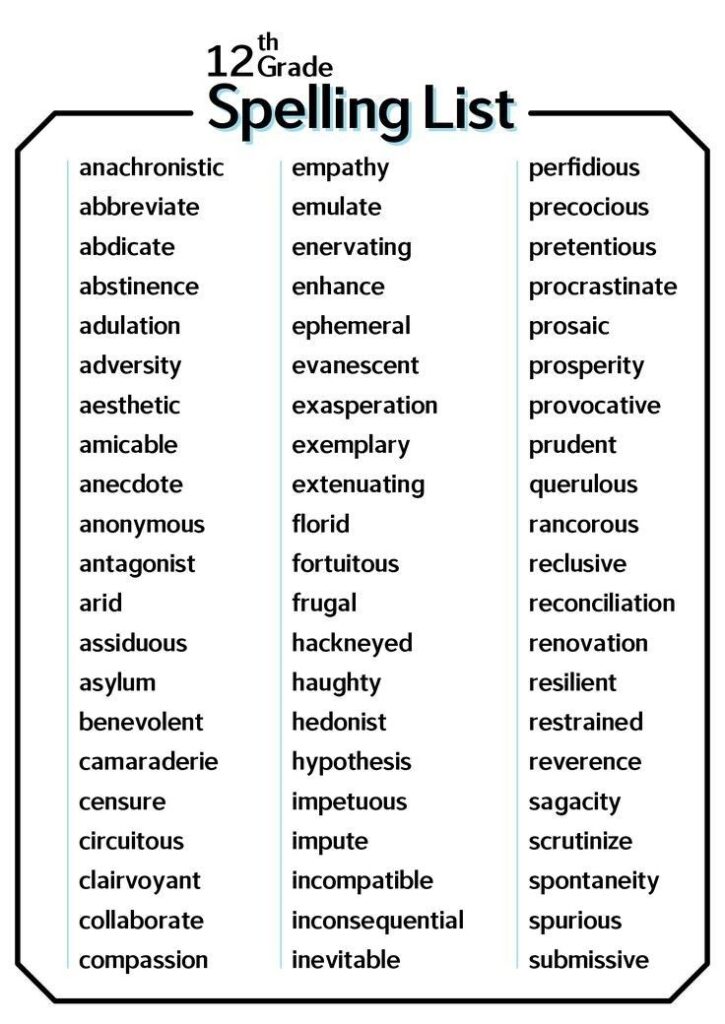
source: Pinterest
More Senior-Level Terms
Additional 12th grade vocabulary words: meticulous—very careful and exact; “He was meticulous in citing sources.” Mitigate—reduce harm or seriousness; “The policy may mitigate pollution.” Nuance—a small but important difference in meaning; “The essay showed nuance.” Paramount—most important; “Safety is paramount.” Stigma—negative label or shame attached to something; “The problem carried a social stigma.” These words fit senior-year study because they are common in academic writing and often require students to notice tone, precision, and subtle meaning rather than just a simple definition.
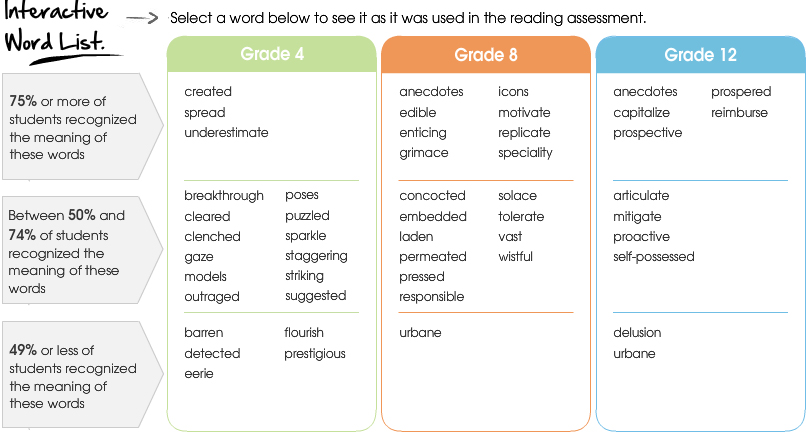
source: The Nation's Report Card
A useful way to study these words is to notice how they function in real sentences. For example, ambiguous and nuanced words often describe ideas, while pragmatic and meticulous describe people or approaches. Some words, like alleviate and mitigate, usually appear in formal contexts such as essays, articles, or speeches. When students can use a word correctly in a sentence of their own, they are usually beyond recognition and into true mastery.
For classroom or review use, this kind of vocabulary list works best when students read each word in context, say the meaning in their own words, and then reuse it in a sentence or discussion. That approach keeps the focus on understanding rather than memorizing. A good senior-year vocabulary set should feel challenging but manageable, with words that help students read more carefully and write with more precision.