1st Grade Subtraction Activities For Easy Practice
1st grade subtraction activities should feel simple, visual, and easy to start. First graders are usually learning how subtraction means taking away, crossing out, or seeing how many are left. The best activities use small numbers, pictures, and hands-on objects so children can understand the idea before moving to more independent practice.
Hands-On Number Practice
source: Amped Up Learning
Manipulatives are a strong starting point for beginning subtraction because children can actually move objects while solving. Counters, cubes, buttons, or snack pieces help students model a story such as “5 apples, take away 2.” A child can line up the objects, remove two, and count what remains. This supports the idea of subtraction as separating or removing, not just writing an equation.
Keep directions short: build, take away, count, write. Activities with ten frames or small trays also work well because they limit the number of items and make the change easy to see. These are ideal for teacher-led lessons, but they can also become quick independent practice once the routine is familiar.
source: Etsy
Picture and Worksheet Support
source: Math Salamanders
source: 123 Homeschool 4 Me
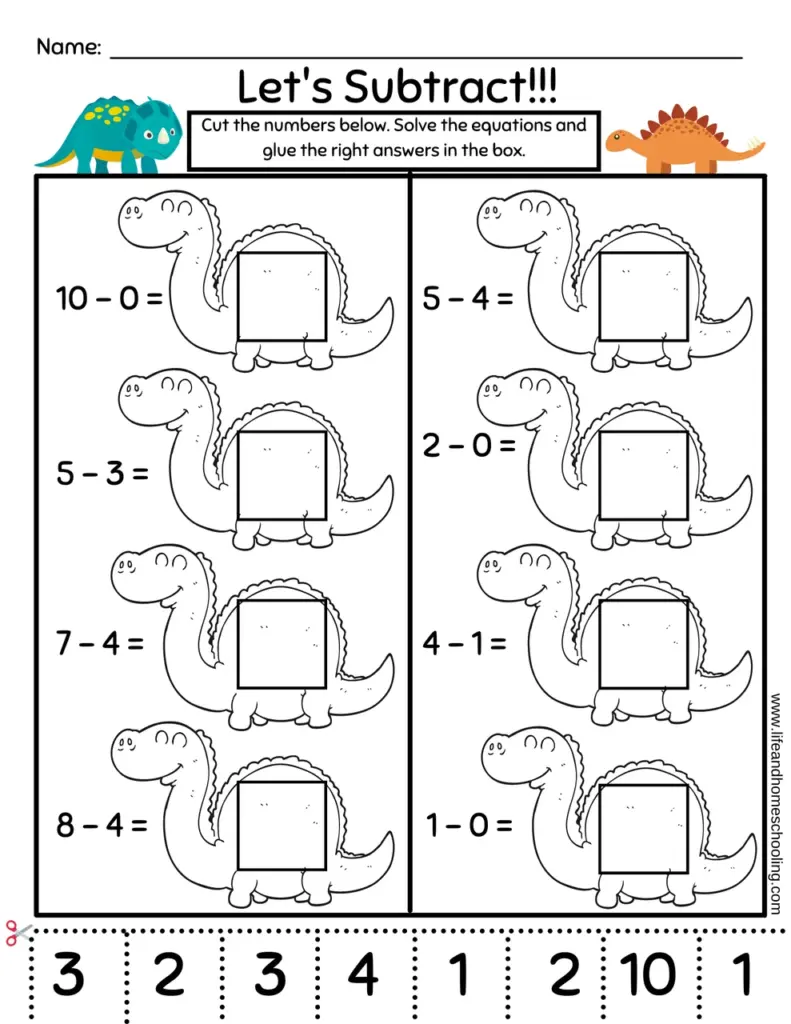
Picture-based subtraction activities help first graders bridge the gap between concrete objects and numbers. A worksheet might show five balloons with two crossed out, or a row of fish where some are removed from the group. Children can count the pictures before and after to find the answer. These activities are best when they use large numbers, simple layouts, and very little text.
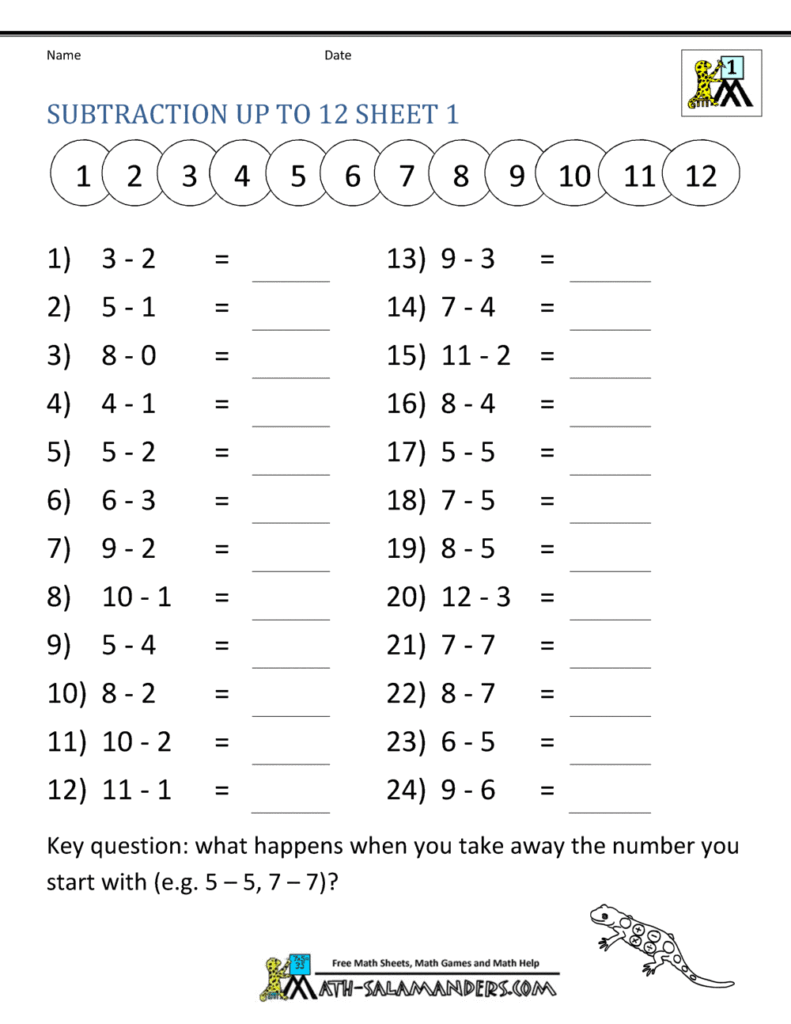
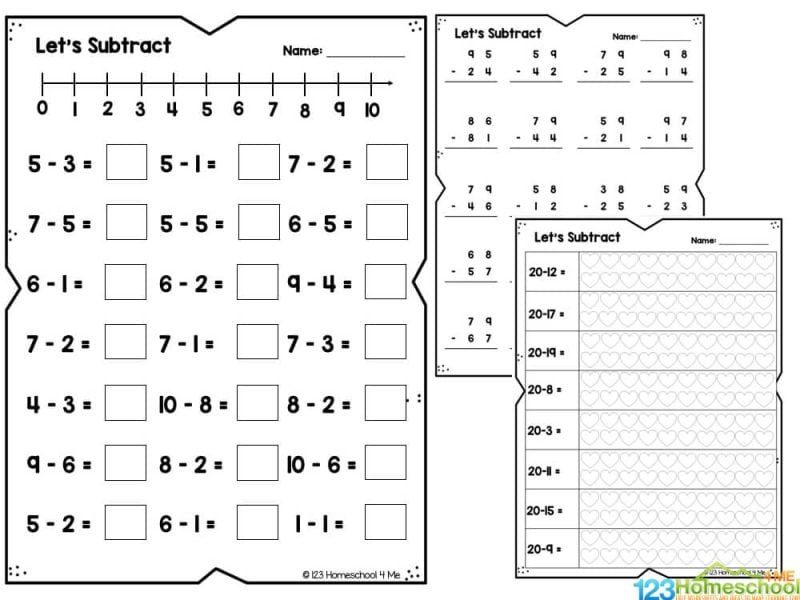
Avoid crowded pages or word problems with too many steps. Look for pages that focus on one skill at a time, such as crossing out, circling the group left over, or matching a picture to an equation. They work well for quiet seatwork, homework, or quick review when students need extra repetition without a long explanation.
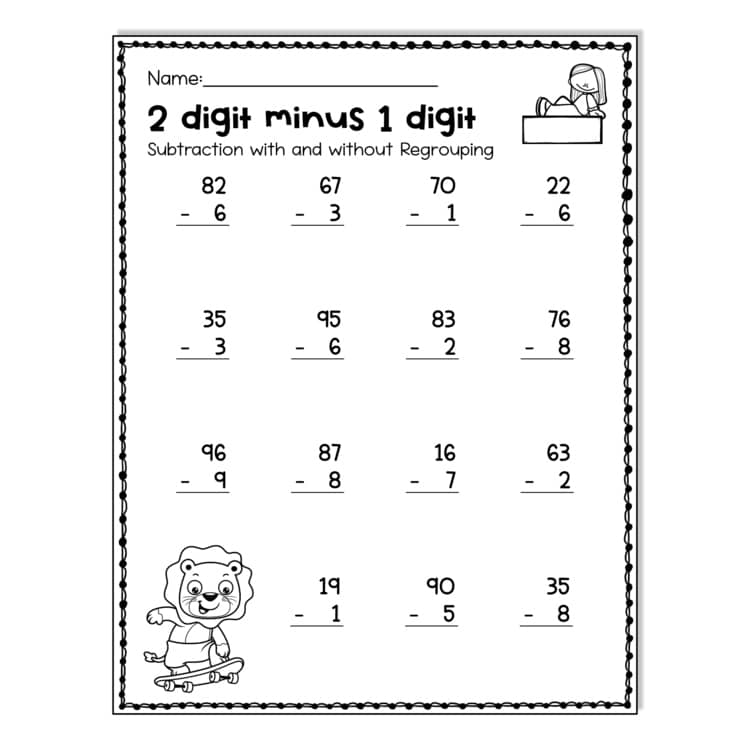
source: TPT
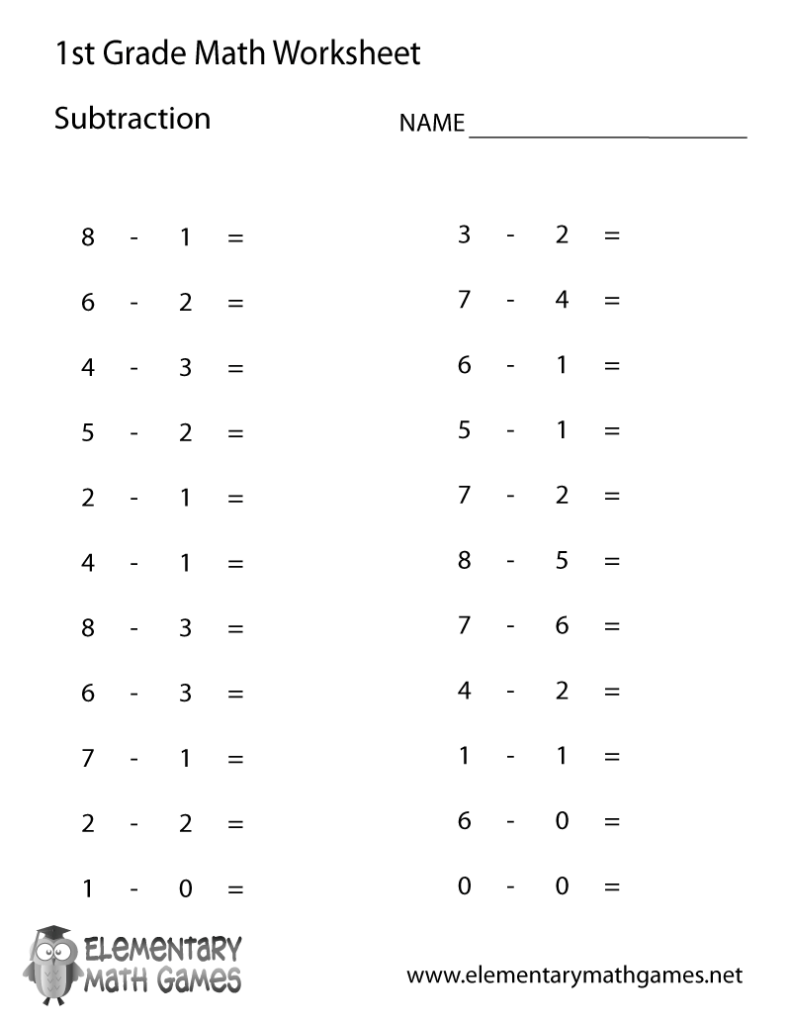
source: Elementary Math Games
Games and choice activities can make subtraction practice feel playful while still staying on level. Matching cards, dice roll-and-subtract games, spinner activities, and simple board games give repeated practice with small numbers and clear rules. These are especially helpful for students who need more engagement than a worksheet provides. When choosing an activity, match it to the child’s readiness: use manipulatives and picture support for beginners, then move to game play or simple paper practice for students who can solve with less help.
For independent work, choose tasks with minimal reading and one clear answer. For teacher- or parent-led practice, choose activities that invite counting aloud, discussing what was taken away, and checking the result together.
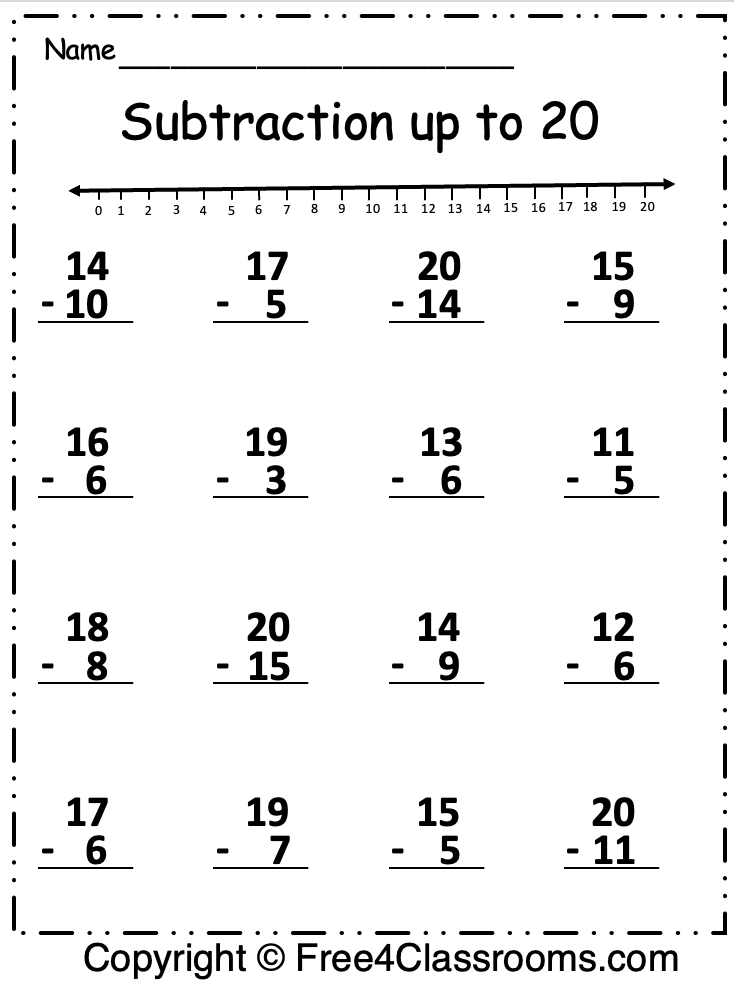
source: Free4Classrooms