1st Grade Triple Digit Addition Riddles For Practice
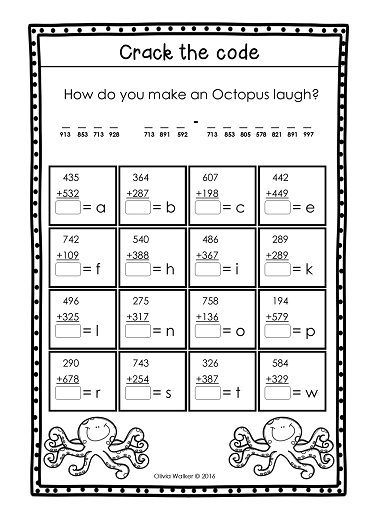
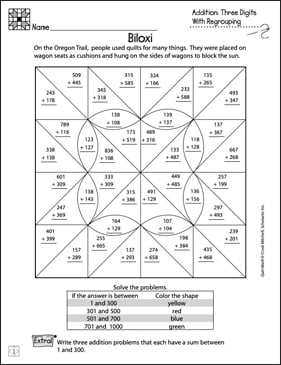
1st grade triple digit addition riddles can make adding three-digit numbers feel like a game instead of a drill. The best ones use simple, familiar numbers and ask children to solve a clue by adding 100s, 10s, and 1s. For first graders, the goal is gentle practice with clear answer checking, not hard strategy. Short, playful prompts work best when the math stays easy to see and say aloud.
Simple Riddle Prompts
Use riddles with numbers that fit early learners. For example: “I have 120 apples and 130 apples. How many apples do I have?” Answer: 250. Another: “I am thinking of a number. It is 111 plus 122.” Answer: 233. These are good because the tens and ones stay simple. A child can check by adding hundreds first, then tens, then ones, or by using base-ten understanding if that is already familiar.
source: Pinterest
source: Scholastic Teachables
source: Scholastic Teachables
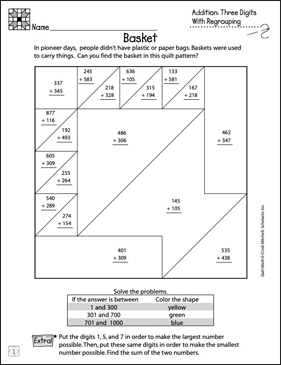
It also helps to keep the riddle language short and friendly. Try: “I have 200 stars, 30 more stars, and 4 more stars. What is my total?” Answer: 234. Or: “A basket has 140 red blocks and 115 blue blocks. How many blocks altogether?” Answer: 255. If regrouping appears, use only tiny examples and model it clearly, such as 9 ones plus 6 ones making 15. That keeps the riddle within first-grade reach.
Printable Practice Use
source: Scholastic Teachables
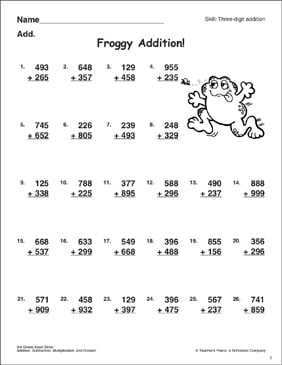
If the riddles are printed, the page can focus on one skill: adding three-digit numbers with simple clues. A parent or teacher can read each riddle aloud, have the child circle the numbers, and then write the sum. This works well as a quick warm-up, a center activity, or a short home practice page. Adding a small answer box beside each riddle makes checking easier and keeps the task organized for young children.
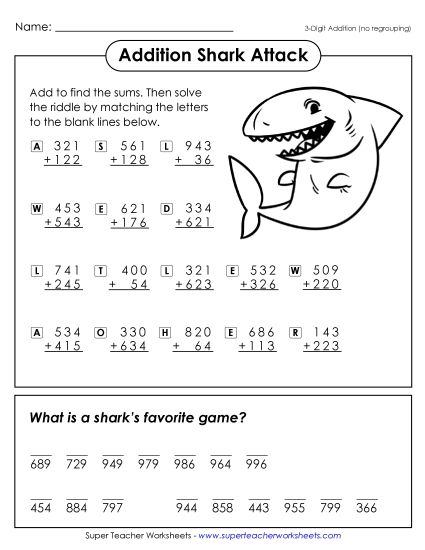
source: Super Teacher Worksheets
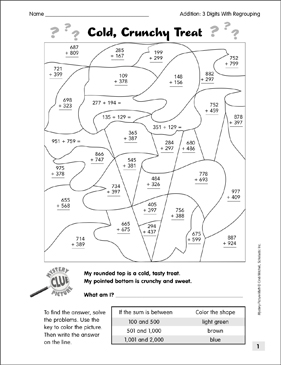
source: Scholastic Teachables
To create more riddles, keep the numbers small and the structure repetitive. Use one clue sentence, one addition problem, and one answer line. Children can even make their own by choosing three parts that add to a total, such as 100, 20, and 3. That turns the page into both solving and creating practice. For first graders, the best triple digit addition riddles are simple, clear, and easy to verify right away.
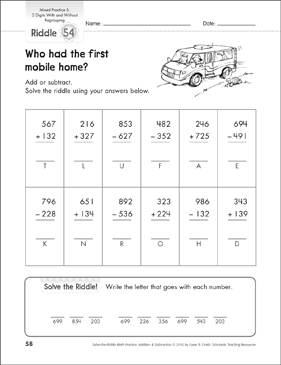
source: Scholastic Teachables