5th Grade Triple Digit Addition Activities That Work
5th grade triple digit addition activities should give students steady practice with adding three-digit numbers accurately and confidently. The best options are simple, repetitive, and easy to adjust for classwork or home practice. Look for activities that strengthen place value, regrouping, and careful calculation so students can build fluency without rushing. A small set of well-chosen practice ideas is usually more helpful than a long list of unrelated math games.
source: Superstar Worksheets
Hands-on activities work especially well for this skill because they make regrouping visible. Use base-ten blocks, place-value disks, or drawn tens-and-ones models to show how 348 + 276 is built step by step. Students can trade ten ones for one ten or ten tens for one hundred before solving. This supports accuracy by connecting each digit to its place value, which helps students avoid mistakes when they add ones, tens, and hundreds separately.
Worksheet Practice Options
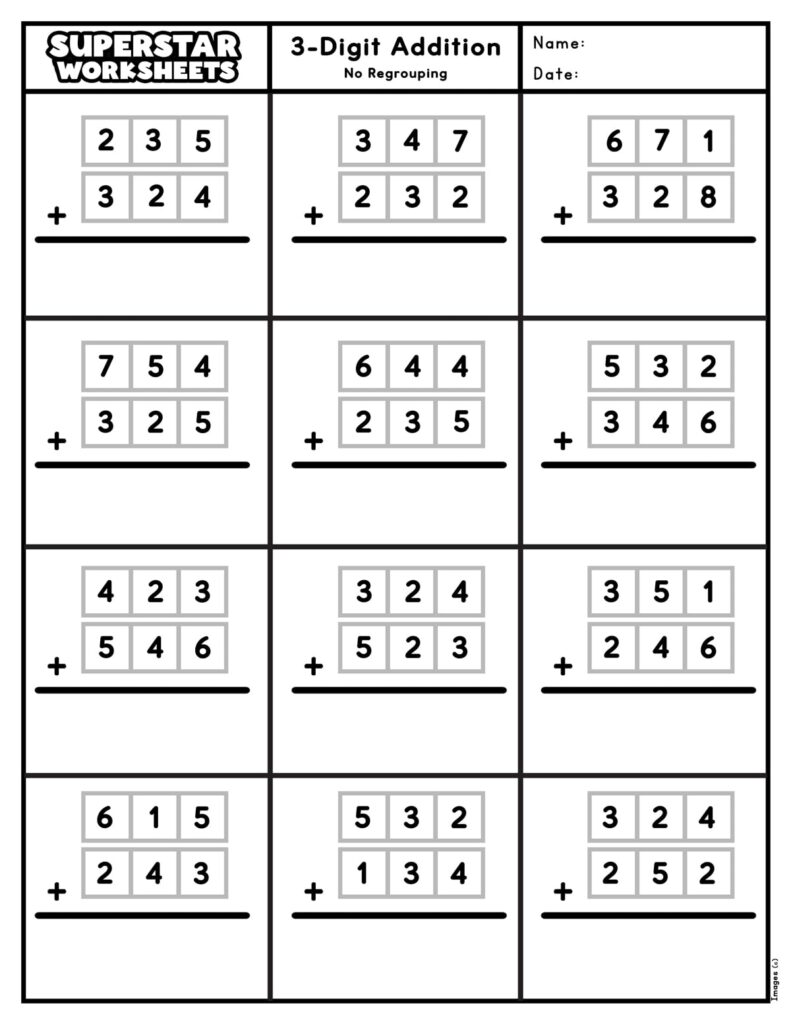
Worksheet-style practice is useful when students need focused repetition with mixed triple-digit sums. Choose problems that keep the numbers in a manageable range and include some with regrouping in one or more places. A strong worksheet activity might ask students to solve, then check by estimating whether the answer is reasonable. That extra step encourages attention to detail and helps students notice errors before they become habits. Short, consistent practice often improves both speed and confidence.
Game-Based Review Ideas
Game-based review keeps 5th grade triple digit addition activities active and engaging. Try a roll-and-add game, where students roll three digits to make two three-digit numbers and then add them. Or use a card draw game where players build the largest sum or solve the most problems in a set time. These games support fluency because students keep adding repeatedly, but the play format lowers pressure and encourages them to keep trying even when problems are challenging.
For best results, mix one hands-on activity, one written practice, and one game each week. That variety gives students different ways to think about the same skill, which helps the process stick. Keep the focus on adding three-digit numbers accurately, not on extra math topics. If students are still making regrouping errors, slow the work down and use models first. Once the steps feel familiar, they can move to quicker practice with more confidence.