2 Truths And A Lie: How To Play The Party Game
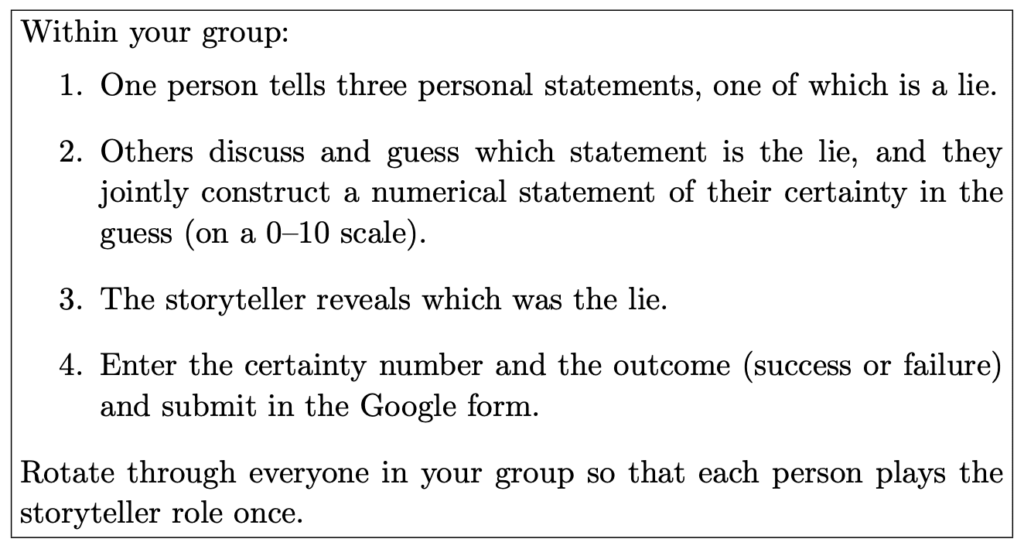
2 truths and a lie is a simple party game built around bluffing and guesswork. One person shares three statements about themselves: two are true and one is false. Everyone else listens, then tries to figure out which statement is the lie. It works with almost no setup, so it is easy to start at a gathering, in a classroom, or on a video call.
source: statmodeling.stat.columbia.edu

source: www.etsy.com
How the game works
The basic play loop is straightforward. One player becomes the speaker and gives three statements in any order. The statements should sound believable, but the lie should not be obvious. After hearing all three, the rest of the group discusses or thinks quietly for a moment and then guesses which statement is false. Once the lie is revealed, the next person takes a turn. The fun comes from mixing obvious facts with surprising details.
source: slidechef.net
To start immediately, you only need a group of people and a willingness to share a little about yourself. There is no special equipment, and the game can be as short or as long as the group wants. Before beginning, agree on one simple rule: the three statements should all be plausible, and the lie should be something the speaker can defend if questioned. Keeping the facts personal and varied makes the guesses more interesting.
Easy prompt ideas
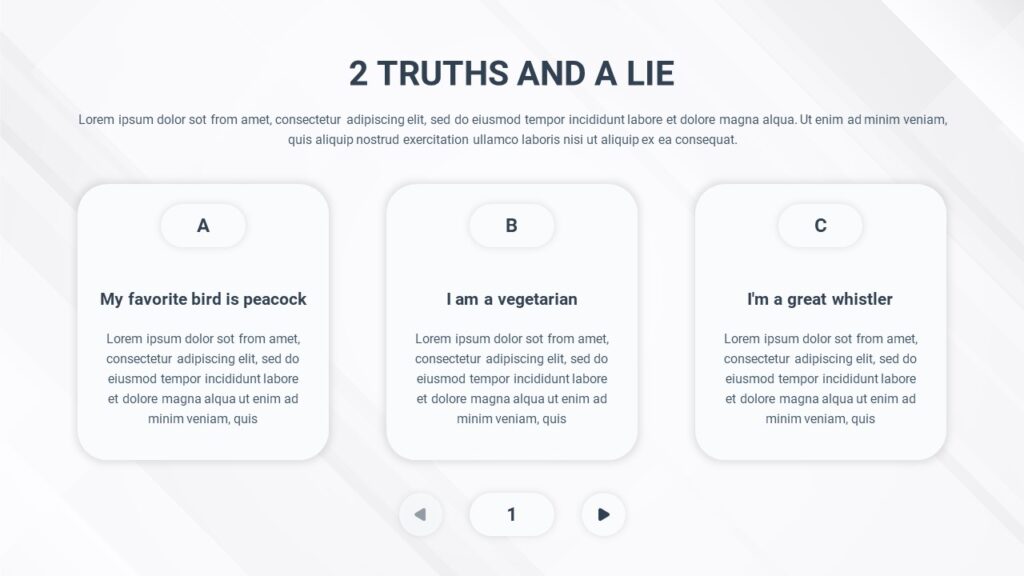
If players need help thinking of statements, use broad categories instead of a full prompt list. Good starting points include childhood memories, travel, jobs, school experiences, hobbies, foods you love, or unusual skills. For example: “I have been stung by a jellyfish,” “I can play an instrument,” and “I have never moved houses.” Another easy angle is to make all three statements about the same theme, which keeps the round focused and helps others compare details.
The best rounds stay simple, quick, and conversational. Encourage players to choose statements that are true enough to be specific, but not so strange that the lie is instantly clear. If the group is new to the game, one or two practice rounds can help everyone understand the rhythm. After that, players usually settle into a flow of telling, guessing, and revealing. That is all 2 truths and a lie needs to work well.