1st Grade Triple Digit Addition Activities That Work
1st grade triple digit addition activities work best when they stay hands-on, visual, and short. First graders need chances to see hundreds, tens, and ones before they add them. Good activities use counters, base-ten blocks, drawings, or simple equations so students can build meaning as they practice. The goal is not speed; it is helping children add three-digit numbers with support for regrouping and place value.
Place Value Builders
A strong first step is a place value activity where students build each addend with base-ten blocks or place value mats. Give them numbers such as 124 + 135 and ask them to place hundreds, tens, and ones in separate columns. Then they combine the ones first, trade when needed, and continue with tens. This keeps the process visible and helps children understand why regrouping happens instead of treating it like a rule to memorize.
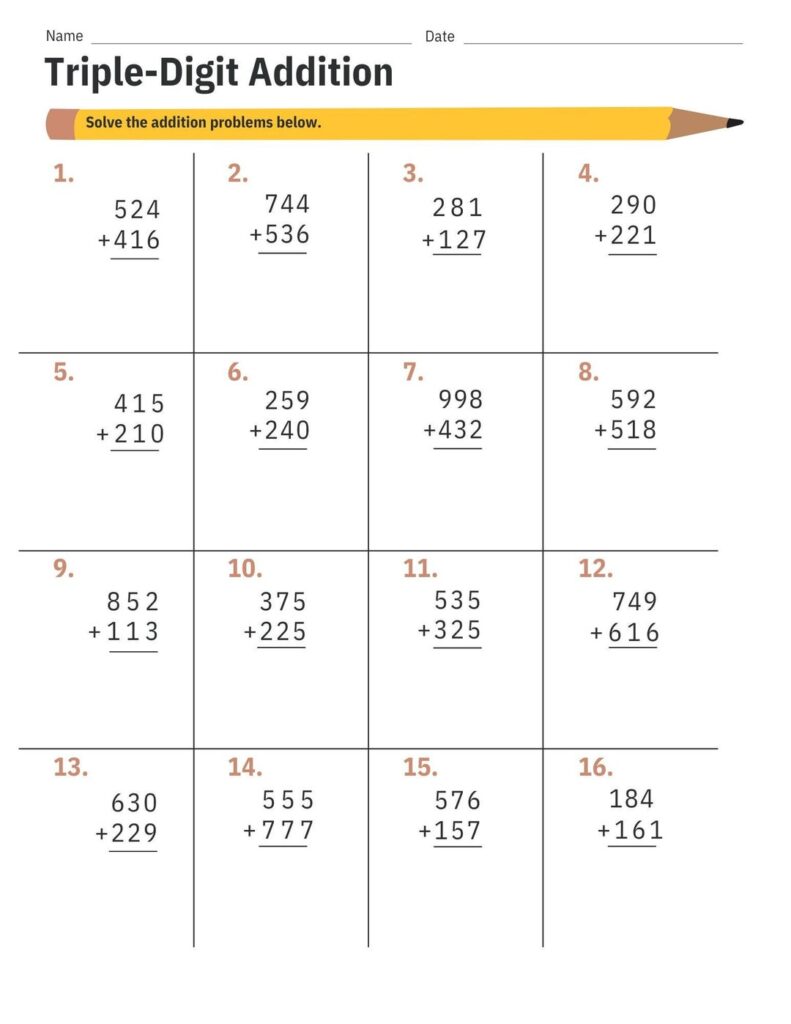
source: Etsy
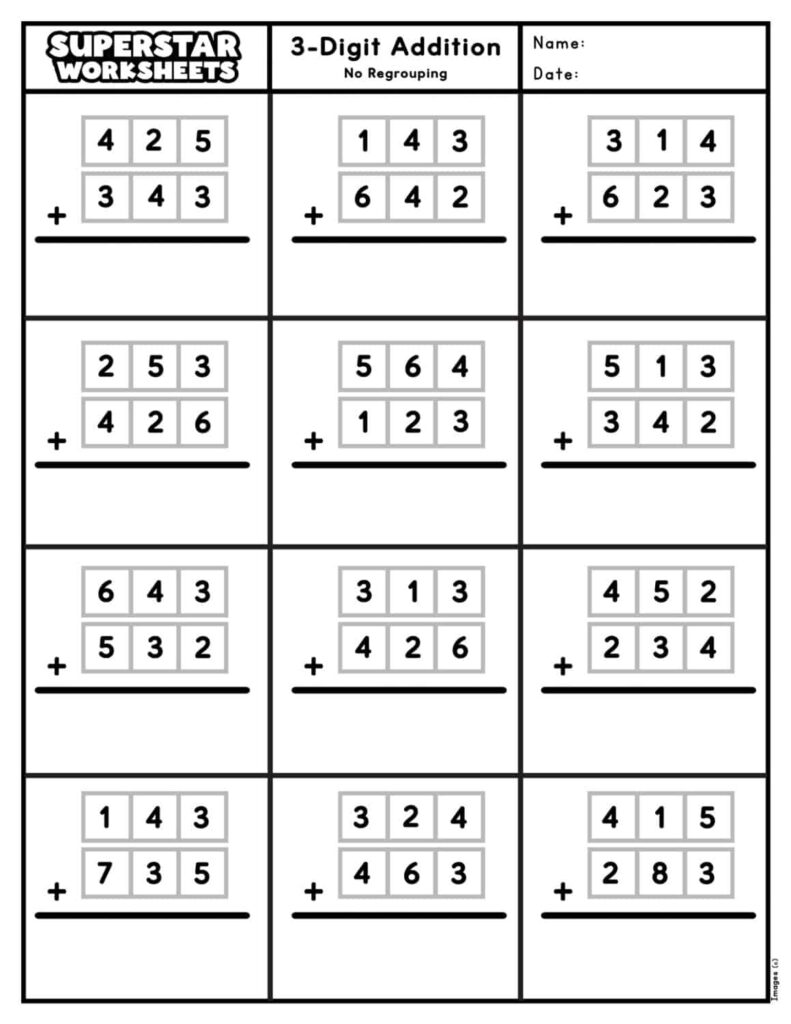
source: Superstar Worksheets
Easy Practice Routines
Simple classroom or home routines keep practice manageable. Use domino-style cards with three-digit numbers, roll-and-add games, or partner draw-and-build boards. Students can roll three digits, make two numbers, and add them with blocks or drawings. At home, a parent can read numbers aloud while the child writes them in expanded form or on graph paper. Keep each round brief so students focus on accuracy and place value rather than long worksheets.
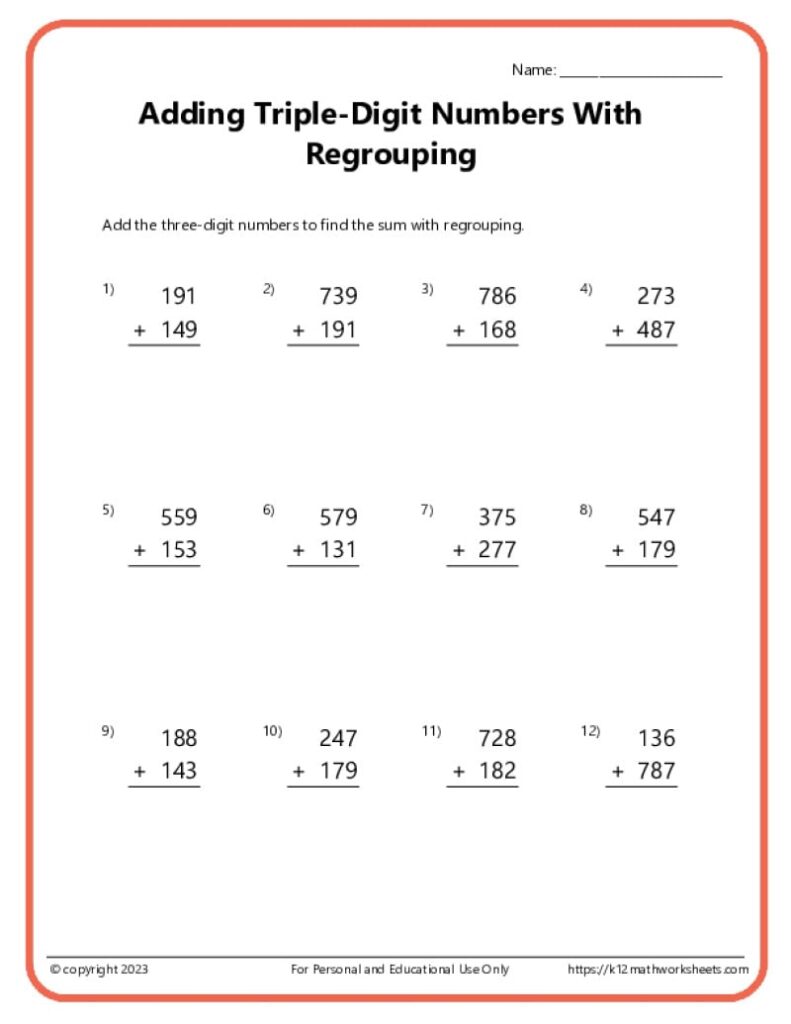
source: K12 Math Worksheets
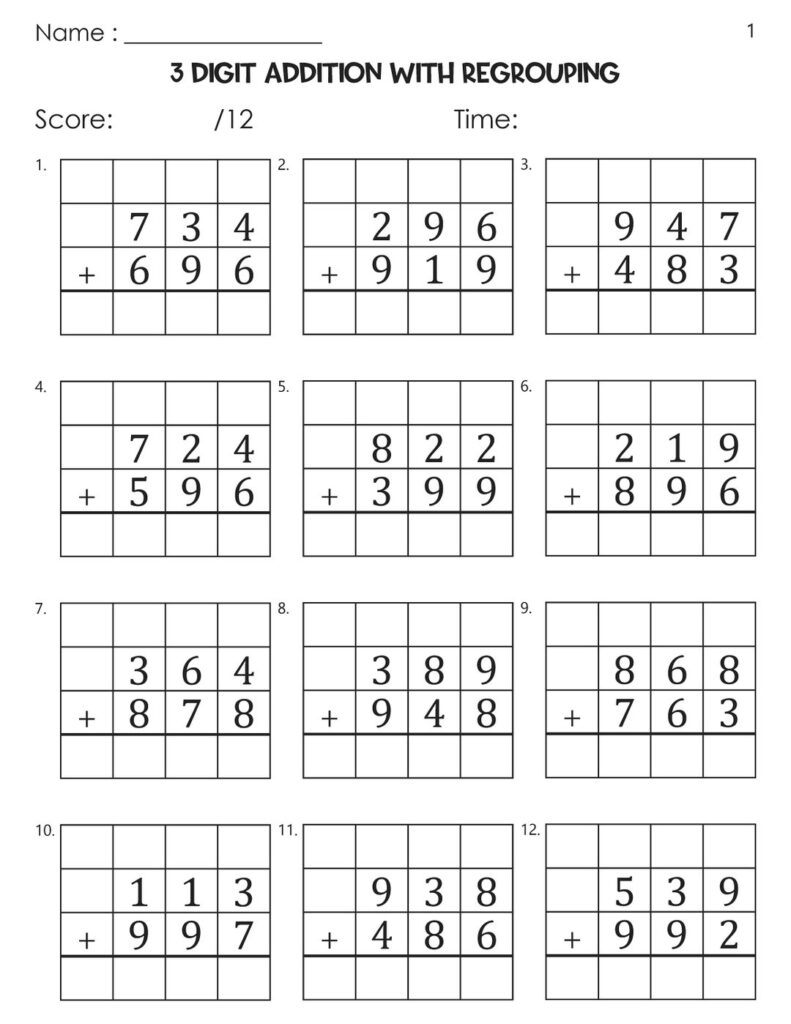
source: Etsy
Regrouping becomes easier when students can see it happen. Try using color-coded tens and ones, crossing out ten ones and replacing them with one ten, or drawing quick sketches of blocks next to each number. Sentence frames like “I had 12 ones, so I traded 10 for 1 ten” help students explain their thinking. For the best 1st grade triple digit addition activities, choose tools that make regrouping clear, repeatable, and low-prep so young learners can practice successfully.