Absolute Value In Word Problems: How To Solve Them
Absolute value in word problems comes up whenever a situation asks for distance, difference, or how far apart two numbers are. The key idea is that absolute value measures size without sign, so you focus on the amount, not whether the number is positive or negative. Once you know what the problem is really asking, turning the words into an expression or equation becomes much easier.
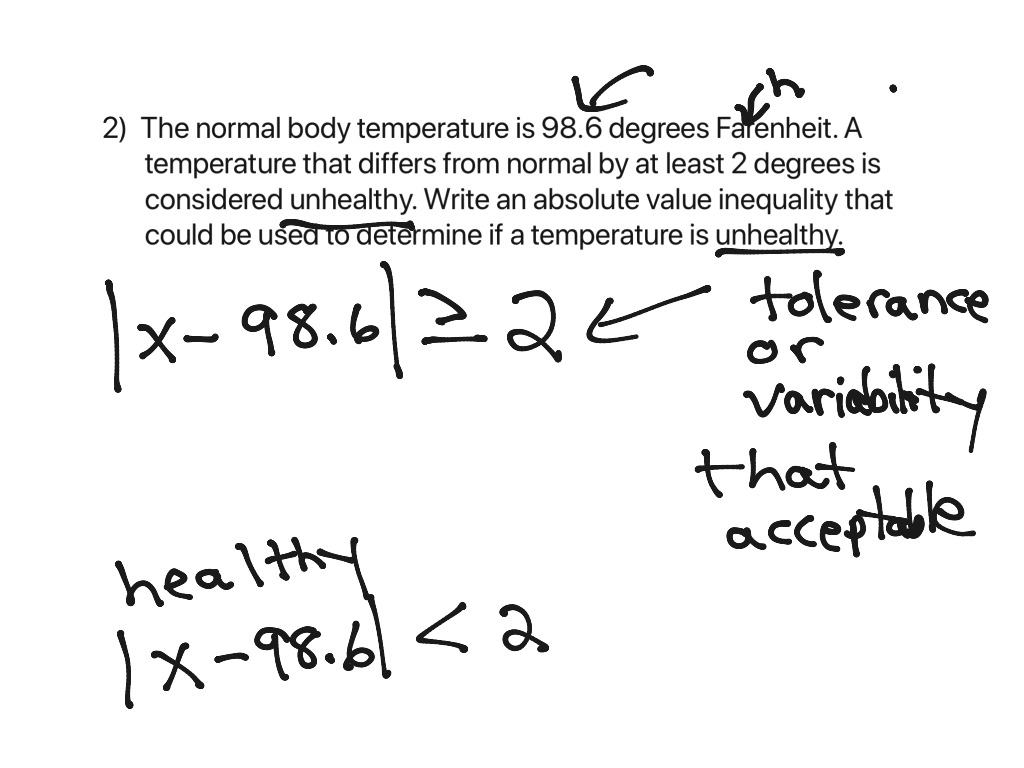
source: ShowMe
How to Spot Absolute Value
Look for clue words that point to magnitude rather than direction. Phrases like distance from zero, how far apart, difference, amount off, or error usually signal absolute value. For example, if a problem asks how far a temperature of -3 is from 5, the question is really about the size of the gap between them, not which one is larger. That leads to an expression such as | -3 – 5 | or | 5 – (-3) |, both of which give the same distance.
The exact setup depends on the wording, but the meaning stays the same: absolute value turns a signed quantity into a nonnegative amount.
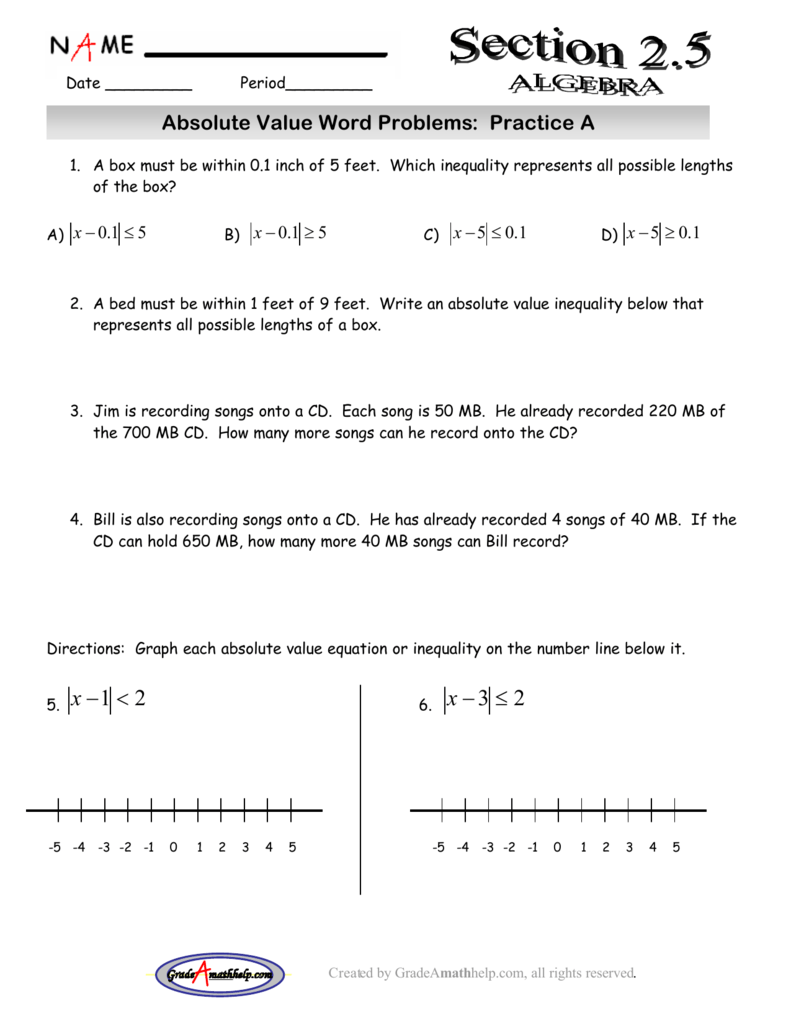
source: Studylib
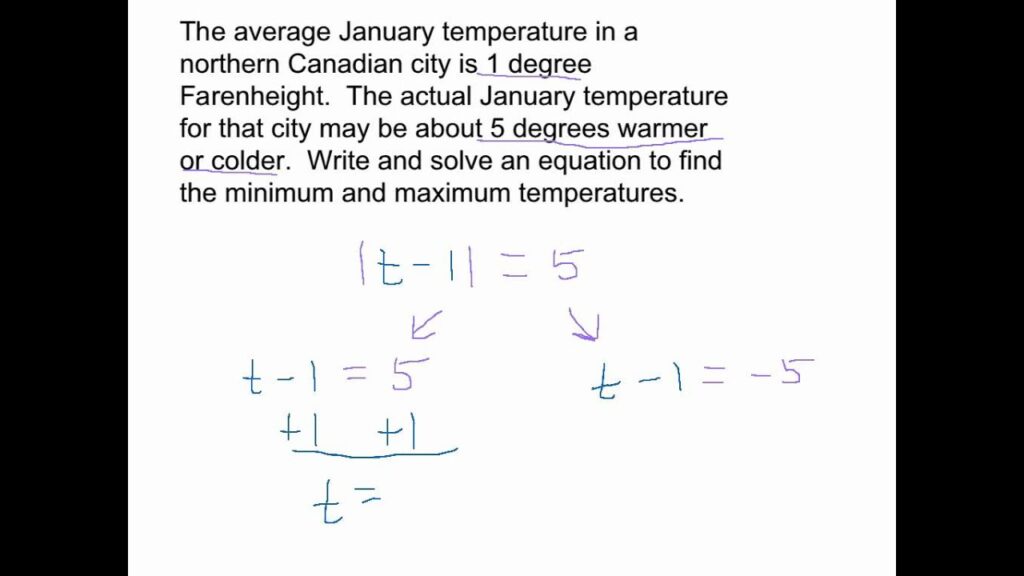
source: YouTube
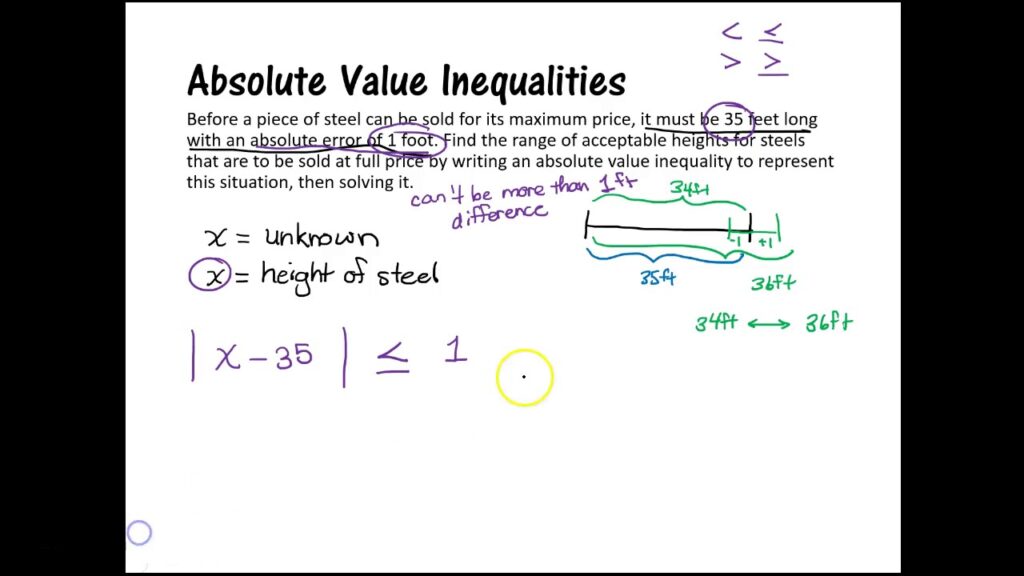
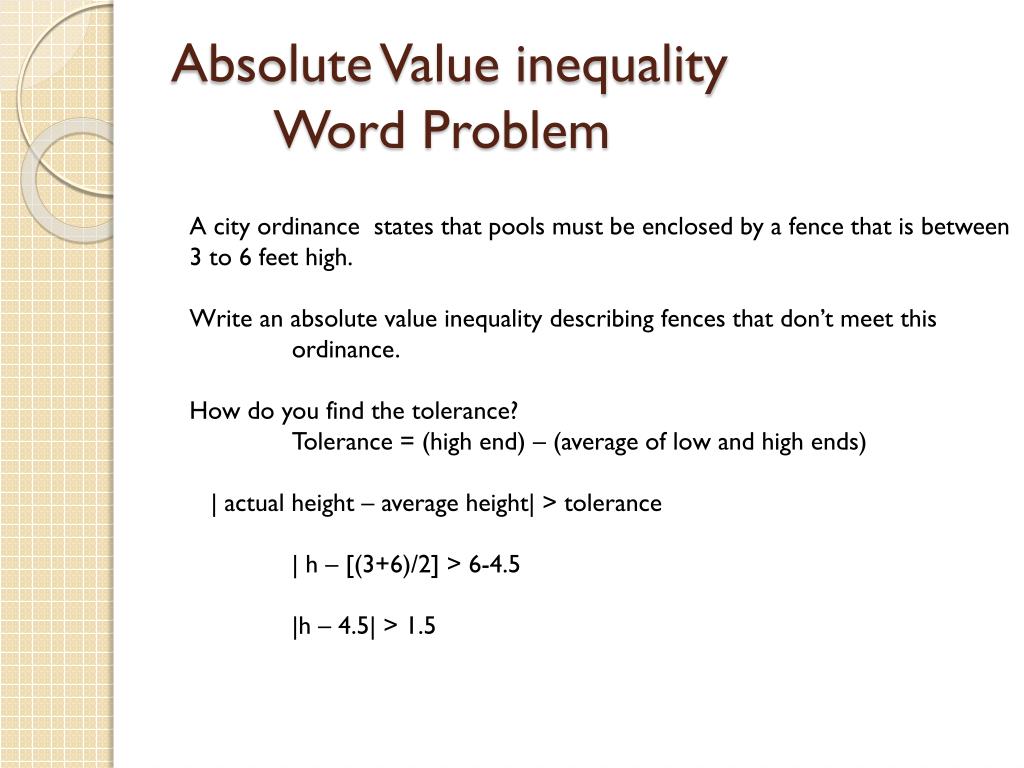
To translate a word problem, identify the two values being compared and decide whether the problem asks for a single distance from zero or the difference between two numbers. Then write the absolute value expression around the subtraction. If a problem says a package should weigh 12 ounces and the actual weight is 10 ounces, the amount off is |10 – 12|. If it says a hiker is 4 miles east of town and another is 1 mile west, the distance between them is |4 – (-1)|.
After evaluating, check the result in context. A negative answer would not make sense for distance or difference, so the final value should be zero or positive.
Checking the Answer
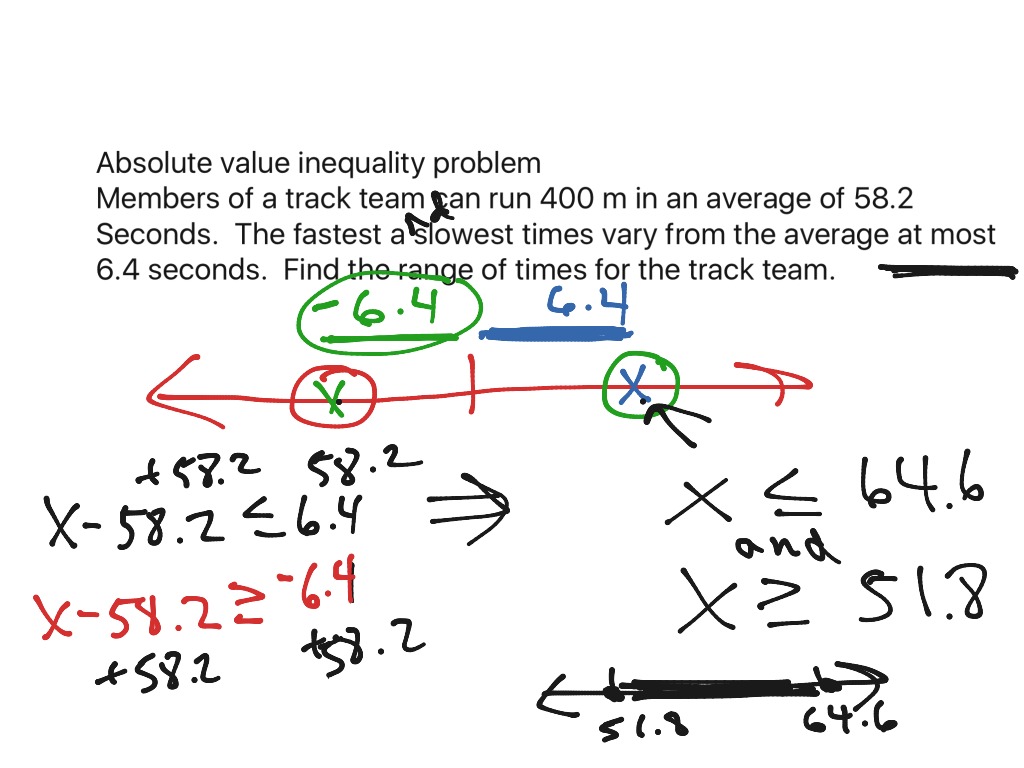
source: ShowMe
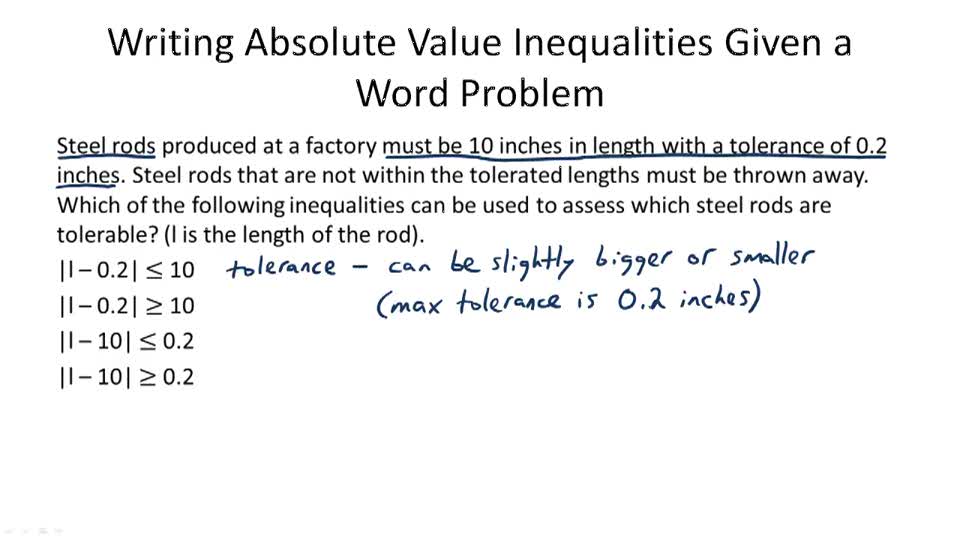
source: CK-12
source: YouTube
The last step is to test whether your answer fits the story. Ask: Does it answer the question being asked? Is a negative result possible in this situation? For absolute value problems, the answer should usually represent a nonnegative amount, because you are measuring size, not direction. If your work gives a negative number, that is a sign to revisit the setup, not to keep the answer as is.
With absolute value in word problems, the strategy is simple: identify the clue, build the expression, solve it, and confirm that the result matches the real-world meaning. That habit makes these problems much easier to trust.
source: SlideServe