3 By 1 Digit Multiplication With Carrying Explained
3 by 1 digit multiplication is a step-by-step way to multiply a three-digit number by a single digit. The key is to work from right to left, one place value at a time, and regroup whenever a product reaches 10 or more. Once you understand the pattern, the method becomes reliable and easy to check, even with larger numbers.
Start with place value
Begin with the ones digit, then move to the tens and hundreds. Multiply each digit by the single-digit number, writing the answer in the correct place value column. If the ones place gives a two-digit product, keep the ones digit and carry the tens digit to the next column. For example, in 246 × 3, first do 6 × 3, then 4 × 3, then 2 × 3. Keeping each digit aligned helps prevent mistakes and makes the regrouping step clear.
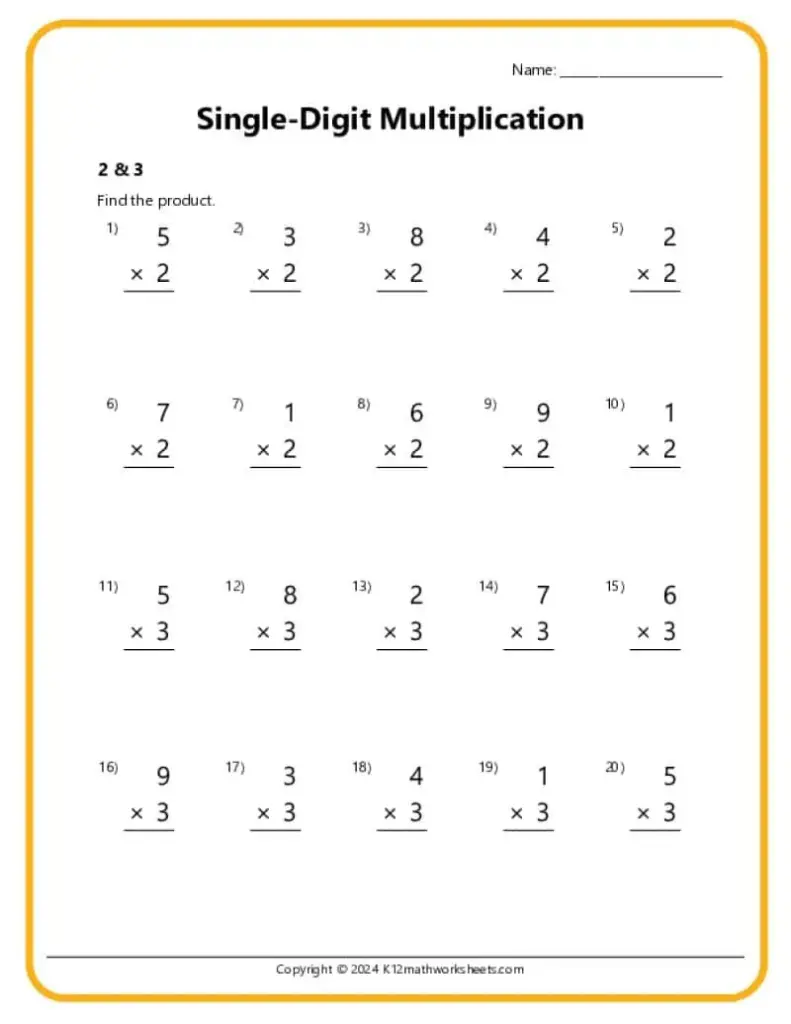
source: K12 Math Worksheets
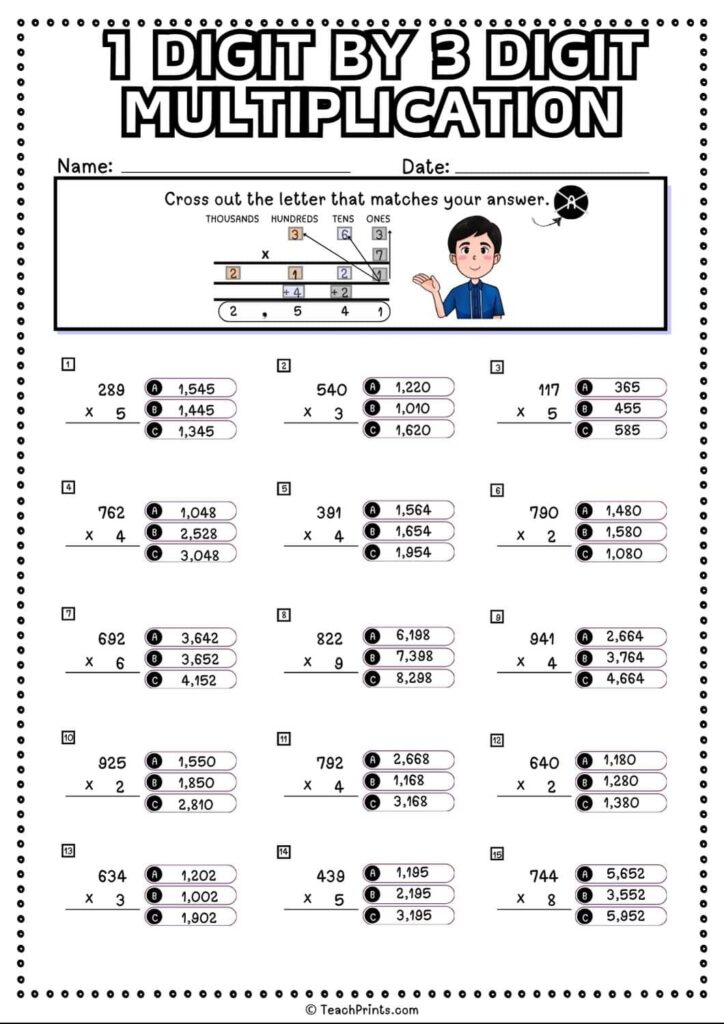
source: Teach Prints
Regrouping each step
When a product is 10 or more, regroup immediately. Suppose you are multiplying 246 × 3. First, 6 × 3 = 18, so write 8 and carry 1 to the tens place. Next, 4 × 3 = 12, plus the carried 1 makes 13, so write 3 and carry 1 again. Finally, 2 × 3 = 6, plus the carried 1 makes 7. The answer is 738. This shows how carrying connects each place value without changing the original number.
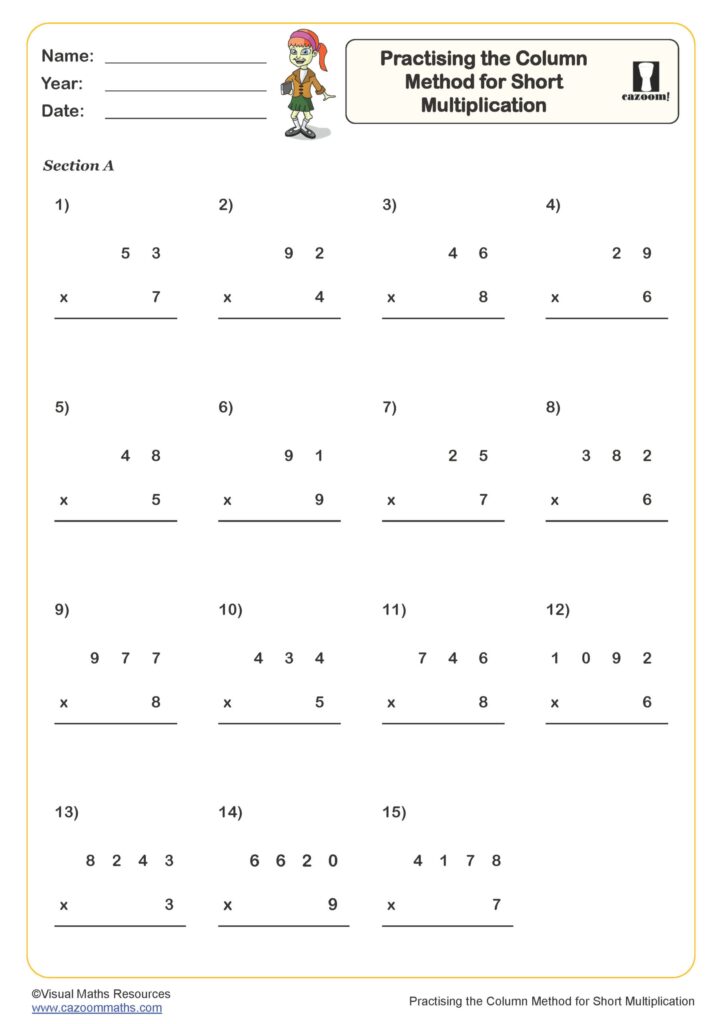
source: Cazoom Maths
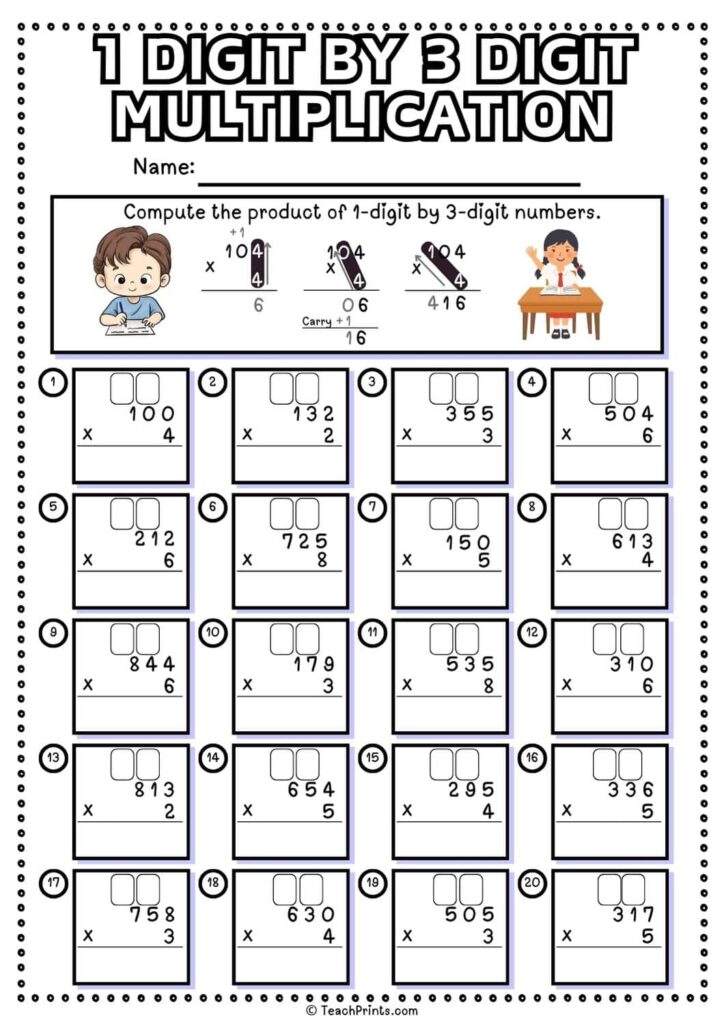
source: Teach Prints
A quick estimate can tell you whether your answer is reasonable. Round the three-digit number to the nearest hundred or tens, then multiply by the one-digit number. For 246 × 3, an estimate of 200 × 3 gives about 600, so 738 should seem plausible. You can also check with the reverse operation: divide the product by the one-digit factor. If 738 ÷ 3 = 246, the multiplication is correct. Estimation and reverse checking make 3 by 1 digit multiplication more dependable.