3 2 1 Exit Ticket For Quick Formative Checks
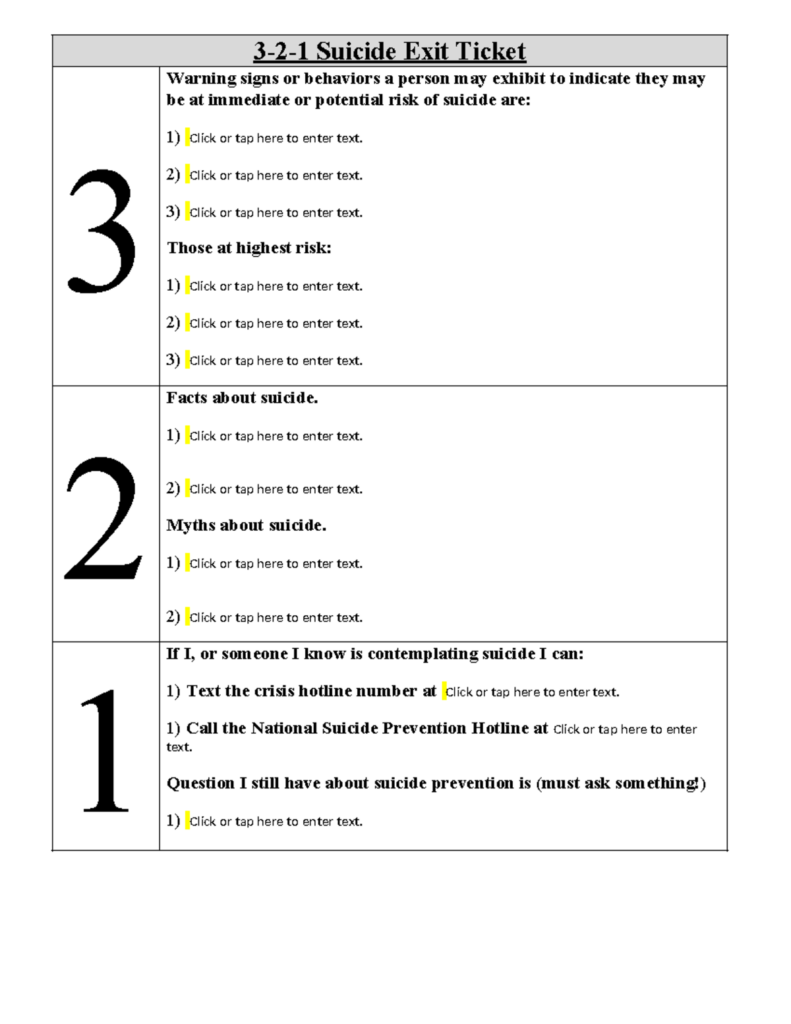
The 3 2 1 exit ticket is a simple way to end a lesson with a quick snapshot of student understanding. It asks learners to record 3 takeaways, 2 questions, and 1 key idea or reflection before they leave. Used well, it gives teachers fast formative feedback and helps students process what they learned in a few focused sentences.
source: Studocu
What It Asks Students To Do
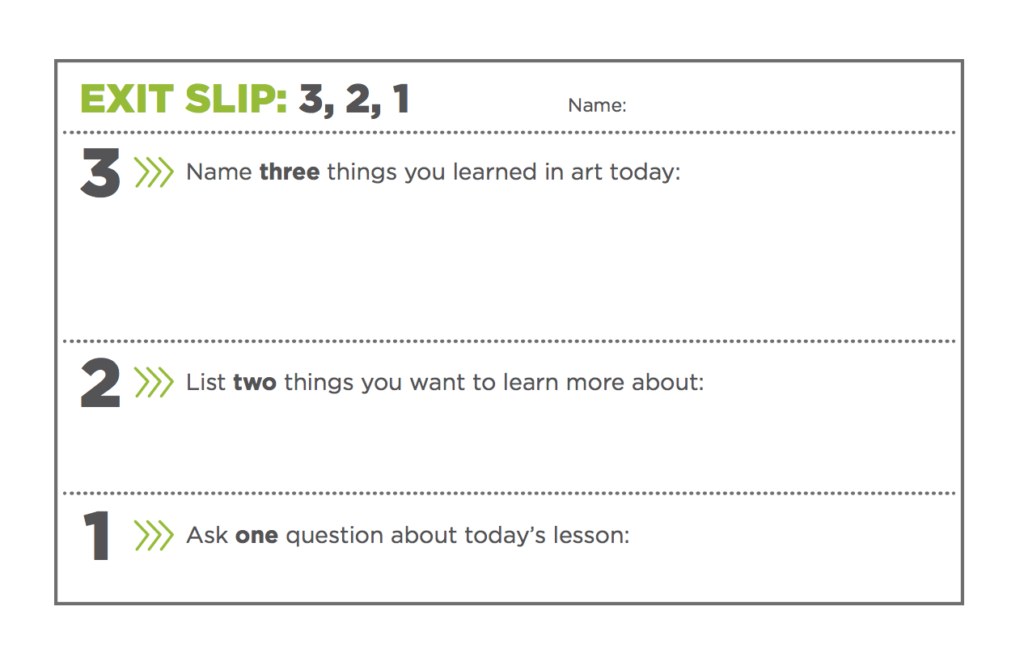
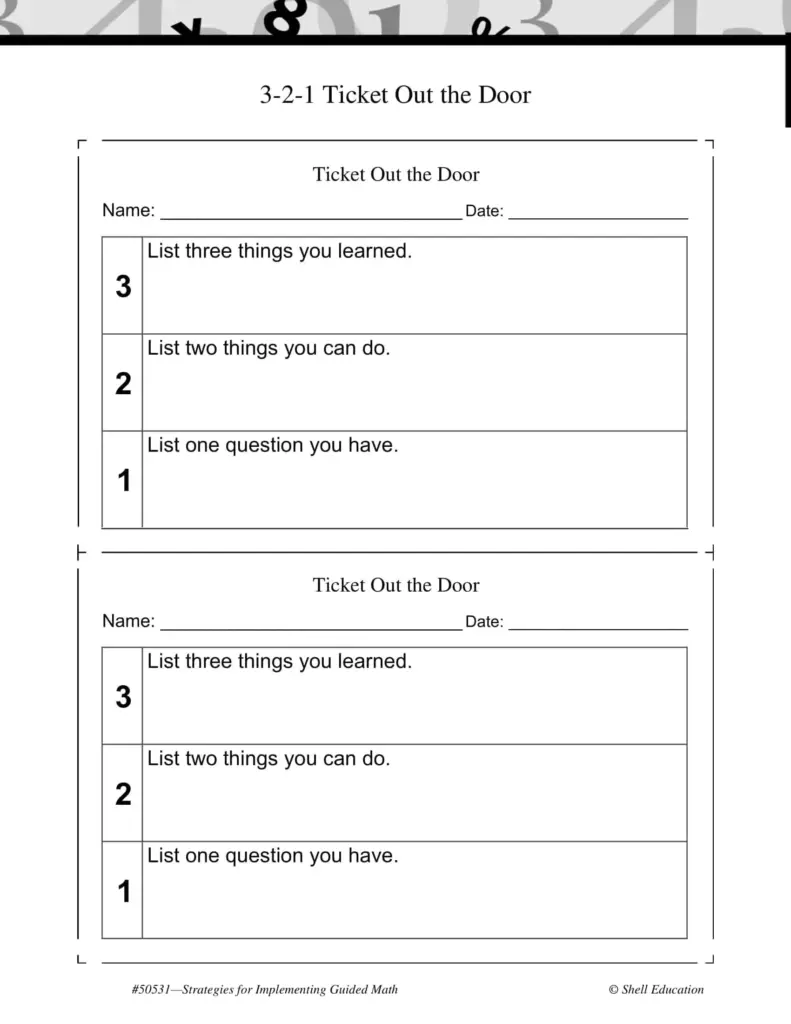
A 3 2 1 exit ticket works because the structure is easy to remember and quick to complete. The “3” usually means three things learned, important details, or takeaways from the lesson. The “2” asks for two questions, confusions, or connections students still have. The “1” is one main idea, reflection, or thing they want to remember. Teachers can print it, project it, or have students respond on paper or digitally.
The format is flexible enough for almost any subject, from reading and science to math and social studies, while still giving a clear end-of-class check for understanding.
source: The Art of Education
source: Shop – Lucky Little Learners
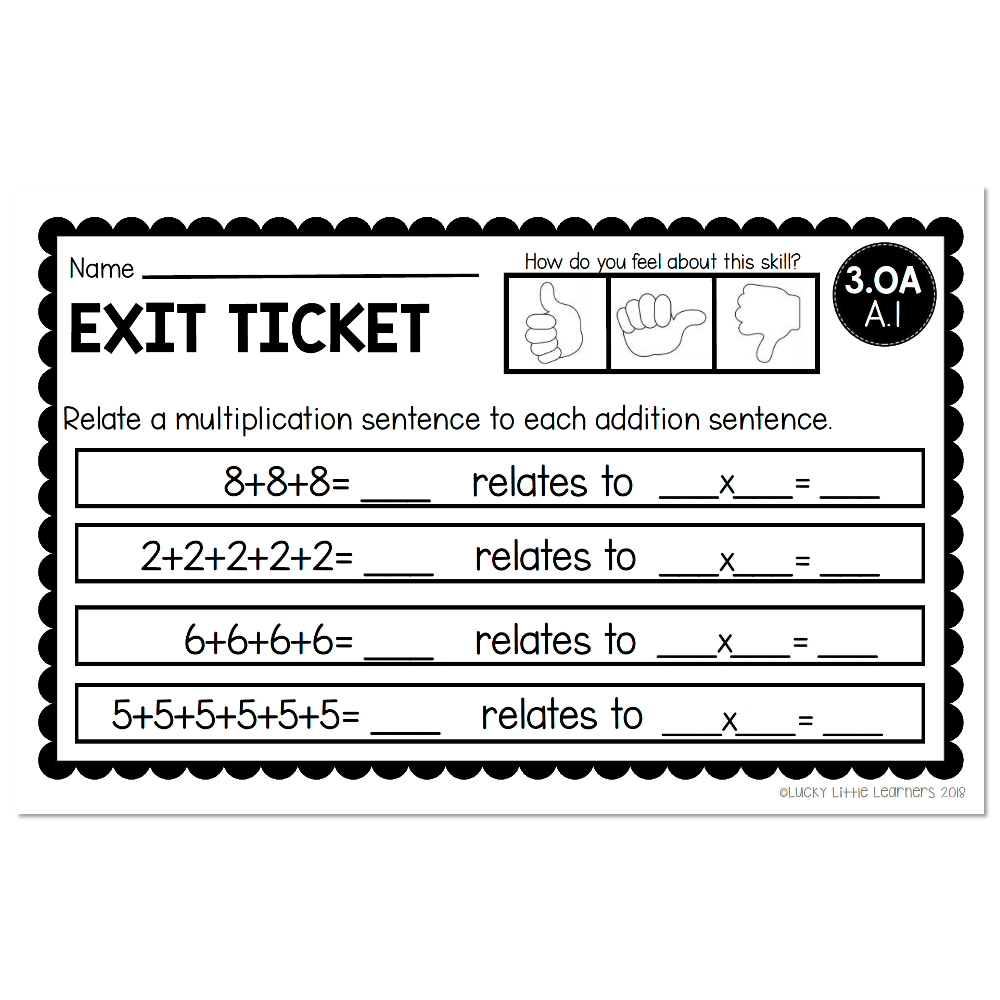
As a formative assessment, the 3 2 1 exit ticket helps you see what stuck, what needs reteaching, and what students are ready to extend. After a lesson, scan responses for patterns rather than grading every detail. If many students list the same misconception, that signals a next step for tomorrow’s lesson. If the “1” responses show a strong common theme, you know the big idea landed.
This makes the exit ticket especially useful after a new concept, a discussion, or a lab. It gives you evidence without adding much time, and it gives students a final pause to think about their learning.
Easy Ways To Adapt It
source: Type Calendar
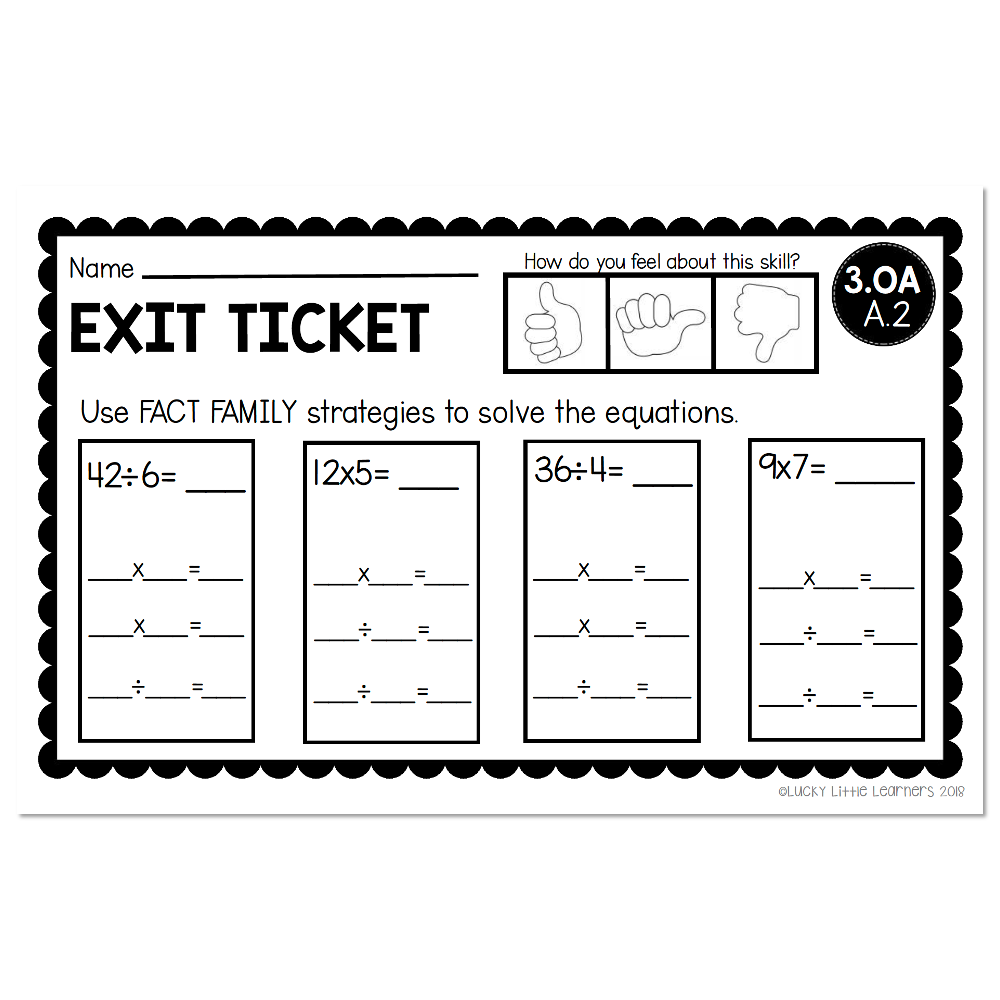
source: Shop – Lucky Little Learners
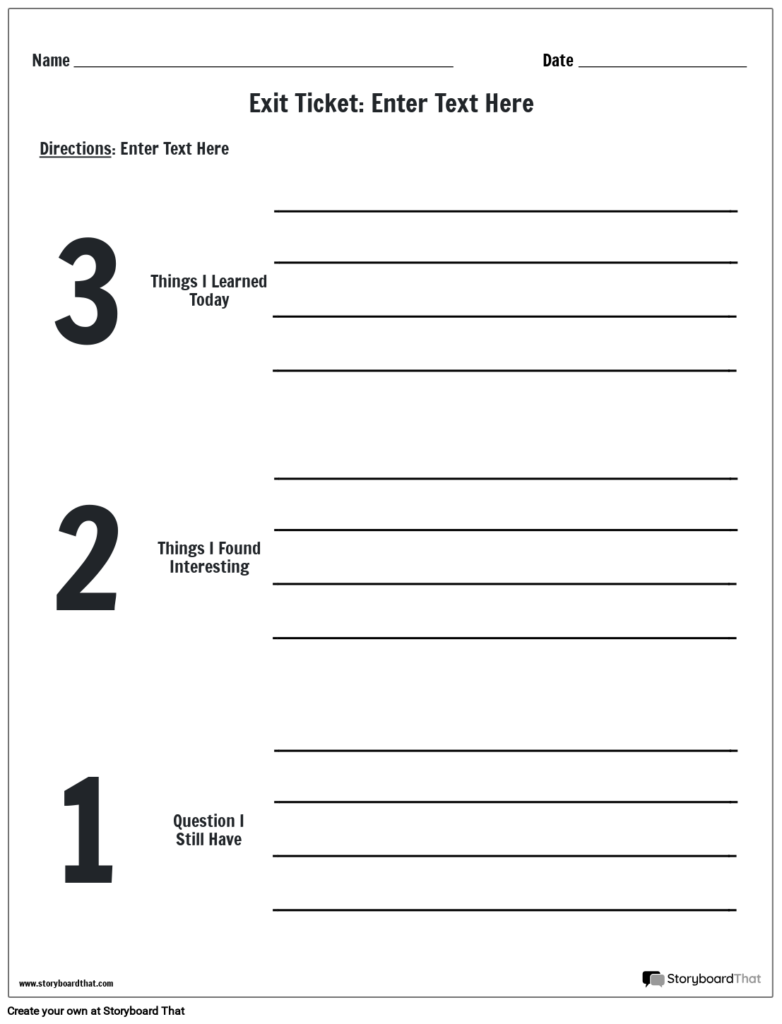
source: Storyboard That
The prompt can be adjusted to fit grade level and subject without losing its purpose. Younger students may draw or use sentence starters such as “I learned,” “I wonder,” and “The most important idea is.” Older students can answer with evidence, vocabulary, or text references. In math, the three items might be strategies used, two errors to avoid, and one rule to remember.
In ELA, students might name themes, questions about a text, and a central claim. In science, they can list observations, questions, and one concept to apply. Keep the structure short, clear, and tied to the lesson goal so the exit ticket stays quick and useful.
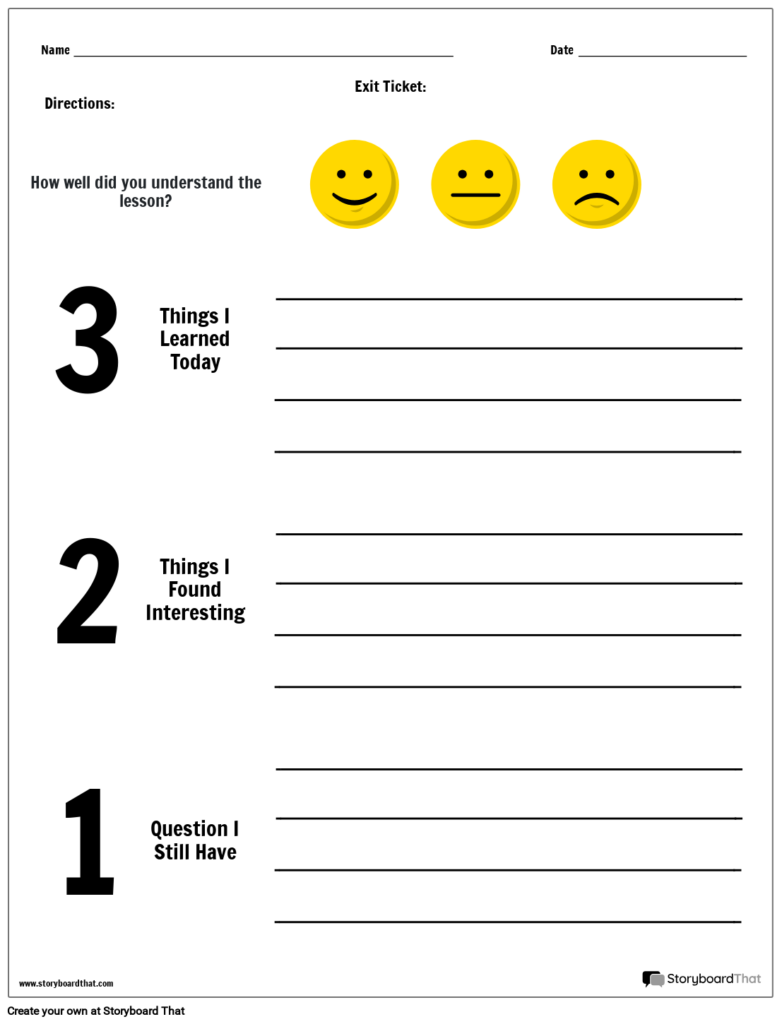
source: Storyboard That