12 Tribes Of Israel: Origin, List, And Variations
The 12 tribes of Israel are the ancestral groups traditionally traced to Jacob, who is also called Israel, and to his sons. In biblical tradition, these tribes form the core family lines of the Israelite people. The basic list is familiar, but the exact count can shift depending on whether Joseph is counted directly or through his sons, and whether Levi is included among the landholding tribes.
Jacob’s sons and origin
source: wordmint.com
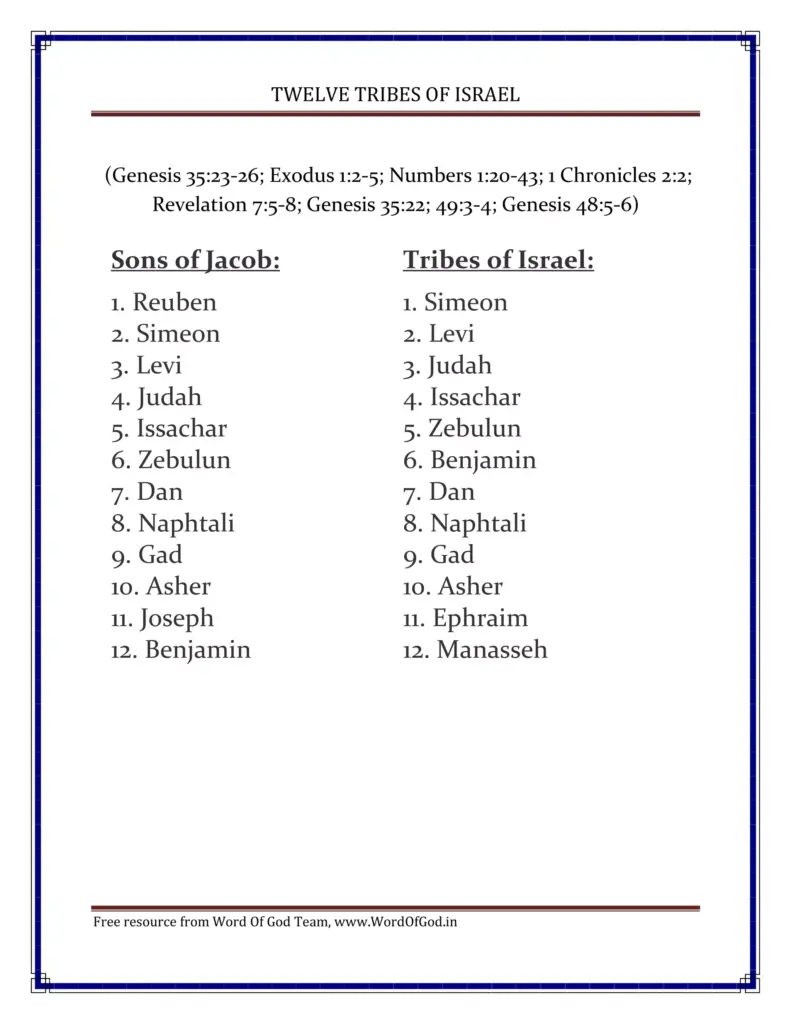
The starting point is Jacob’s twelve sons: Reuben, Simeon, Levi, Judah, Dan, Naphtali, Gad, Asher, Issachar, Zebulun, Joseph, and Benjamin. From these sons come the tribal names used throughout Scripture. Because Joseph’s line is often divided between his two sons, Ephraim and Manasseh, many lists still preserve the symbolic total of twelve even when Joseph is not listed as one tribe.
This is why readers will sometimes see slightly different tribal lists in different biblical books. The tribes are both family lines and covenant identity markers, so the list can serve a historical, literary, or territorial purpose depending on the passage.
source: www.slideshare.net
Why Levi is different
Levi is the main exception in tribal counts because the Levites were set apart for priestly and sanctuary duties. In many passages, Levi is not counted as one of the land-inheriting tribes, since the Levites did not receive a normal territorial allotment like the others. Instead, they were given towns among the tribes and a special religious role. When Levi is omitted from a land list, Joseph is usually represented by Ephraim and Manasseh so the total remains twelve.
That pattern helps explain why “12 tribes of Israel” does not always mean the exact same twelve names in every biblical context.